
Reviewed · VIEUX-PORT & LE PANIER WALKS
Marseille: cityrando Le Vieux-Port Le Panier La Joliette
Marseille’s street corners tell stories fast. This cityrando stitches together the Old Port, Le Panier, La Joliette, and the MuCEM/J4 area so you get both the maritime heart and the modern waterfront in one day. I like the way the route keeps moving, so you’re never stuck in one museum room too long.
Two things I’d highlight: you spend serious time with a guide who knows how to explain what you’re seeing, and you get multiple “oh wow” moments—from old churches and alleyways to big views off the J4 esplanade. One drawback to consider: it’s a walking tour, and your pace depends on your group size (some bookings can turn into a longer, bigger-distance stroll).
In This Review
- Key Highlights You’ll Feel on the Ground
- A Route That Links Marseille’s Waterfront to Its Sharpest Streets
- Marché aux Poissons: Where the Tour Gets Real
- Le Panier: Street Art, Old Stones, and a Guide Who Has Stories
- Marseille Cathedral: A Quick Photo Stop That Still Matters
- La Joliette: When Marseille Reinvents Its Waterfront District
- MuCEM and the J4 Esplanade: Big Architecture, Sea Views, Real Context
- Pace, Group Size, and Why the Guide Makes or Breaks It
- Price and Value: What $34 Covers (and What It Doesn’t)
- Practical Tips Before You Go
- Who This Tour Suits Best
- Should You Book Marseille: Cityrando Le Vieux-Port Le Panier La Joliette?
- FAQ
- How long is the Marseille cityrando?
- Where does the tour start?
- What languages are available?
- Is the tour wheelchair accessible?
- What’s included in the price?
- Is food included?
Key Highlights You’ll Feel on the Ground
- Small group (up to 10) with a private guide, so questions don’t get lost.
- Market start at Marché aux Poissons, a real sensory opener before the history talks begin.
- Le Panier’s maze of streets and street art, plus time for photo stops and a culture-focused visit.
- La Joliette’s mix of redevelopment and old structures, including the Silo d’Arenc area.
- MuCEM at the J4 esplanade, plus the Passerelle Saint-Jean footbridge for sea-and-city angles.
- Sea views that change as you walk, especially around MuCEM/Fort Saint-Jean.
A Route That Links Marseille’s Waterfront to Its Sharpest Streets
This experience works because it follows a clear geographic story. You start where Marseille has traded and worked for centuries, then you move north into one of the city’s most character-heavy quarters, then east toward the redeveloped commercial/waterfront zone, and finish in a modern cultural landmark area by the sea.
The best part is that the route doesn’t treat Marseille as one big postcard. You see older neighborhoods with tight streets and landmark buildings, then you shift to the industrial-to-modern transformation you can’t ignore around La Joliette and the J4.
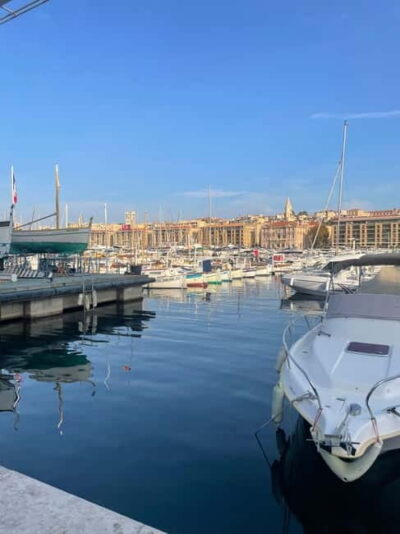
More of the Vieux-Port and Le Panier on foot



Marché aux Poissons: Where the Tour Gets Real
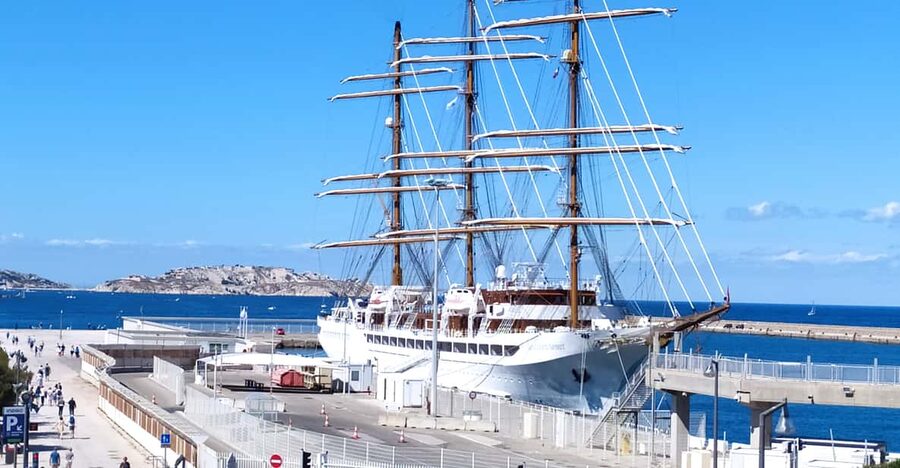
You begin at Marché aux Poissons, the fish market area near the harbor. It’s a strong starting point because it sets the tone: Marseille is a port city, and the first impression is the working rhythm of daily life.
After the meet-up, you walk into a short Marseille History Museum segment (about 15 minutes). It’s not a long sit-down. The goal is quick context so later streets and buildings make more sense when you’re outside again.
Practical tip: start with comfortable shoes. The market area can be crowded, and once the tour moves on you’ll want a stable stride for the older streets and waterfront edges.
Le Panier: Street Art, Old Stones, and a Guide Who Has Stories
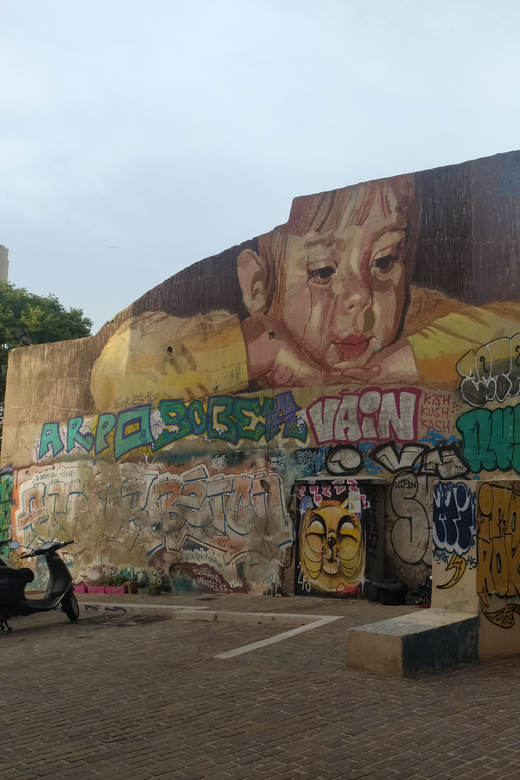
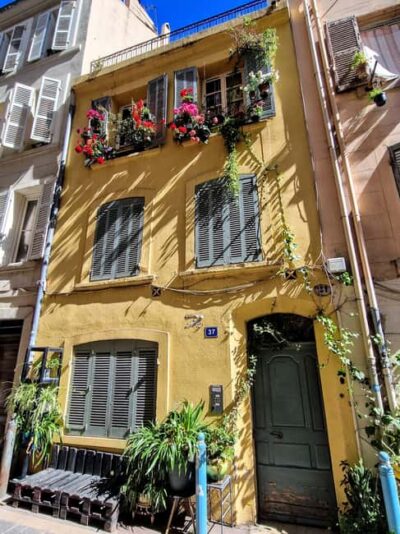
From the Old Port zone, you go into Le Panier, just north of the harbor. This is where Marseille feels like a human-scale neighborhood: narrow lanes, small squares, and plenty of places where you can pause for photos.
You’ll spend about an hour here with a mix of sightseeing and a guided explanation. The standout pull is how the guide connects the visual details—street art, architecture, and those tight passageways—to how the neighborhood evolved.
One stop worth noting is the Vieille Charité, a 17th-century former almshouse now used as a cultural center. Even if you’re not there for a deep museum session, the building itself gives you a “how did this place become this” moment.
Food note: there’s time set aside for tasting during this section, but food and drinks aren’t listed as included. Translation for your wallet: you can plan to buy something small if you want, but don’t assume a full snack will be covered.
Marseille Cathedral: A Quick Photo Stop That Still Matters
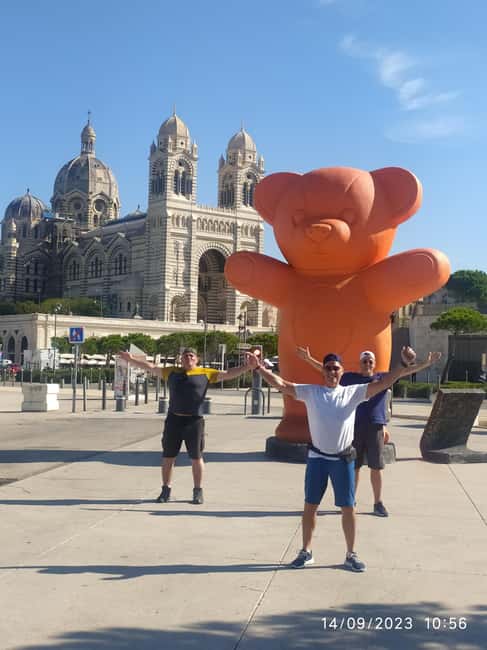
Next comes Marseille Cathedral. You’ll have time for photos, a visit, and a guided walk segment (about 30 minutes).
This is the kind of stop that’s short but meaningful because it changes your perspective. After the alley-style walking of Le Panier, you get a clearer landmark you can orient around. It also gives the tour a “turn in time” feel—something Marseille does well, mixing different eras in the same walking radius.
La Joliette: When Marseille Reinvents Its Waterfront District
Then you shift to La Joliette, the business and commercial area that has seen major redevelopment. This part of the route is for people who like cities that keep changing—without pretending the old industrial bones disappeared.
You get another set of photo stops and guided time (about an hour), plus shopping and sightseeing moments. A highlight in this zone is the Silo d’Arenc, a former grain silo turned cultural venue. Even if you don’t go inside, the conversion itself is the point: you’re watching the city repurpose infrastructure instead of discarding it.
You’ll also pass through/around Les Terrasses du Port, a shopping center with a rooftop that offers panoramic views over the city and sea. This is one of those “take five minutes, then keep walking” areas—because the view helps you understand where you are before you move toward the final harbor-side museum complex.
Food note again: tasting time is on the schedule, but food and drinks are not listed as included. If you want to eat, treat it like a chance to pick what you like rather than a fixed meal.





MuCEM and the J4 Esplanade: Big Architecture, Sea Views, Real Context
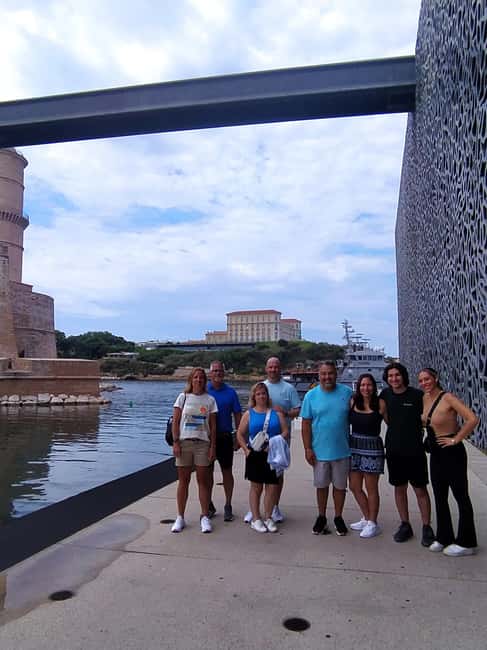
The finish zone is the J4 esplanade, right by the entrance to the Old Port area. This is where the modern Marseille show is loud and clear.
You’ll visit the Museum of European and Mediterranean Civilisations (MuCEM), with guided time (about 45 minutes) plus sightseeing walking. The museum’s setting matters as much as the museum itself: it’s designed for you to notice the relationship between culture, coastline, and the harbor.
One of the signature moments here is the Passerelle Saint-Jean footbridge, connecting MuCEM to Fort Saint-Jean. The route gives you sea-and-city angles that feel different from the earlier harbor walk—higher, more open, and more panoramic.
If you like architecture, this part is a strong payoff. It’s also a good place to slow down briefly, because once you’re back walking through older lanes, it can be hard to remember how the waterfront looks from above.
Pace, Group Size, and Why the Guide Makes or Breaks It
The tour is led by a live guide in English or French, and the group is limited to 10 participants. With a small group, the guide can steer the walking pace and adjust explanations depending on what you’re asking.
The guiding talent is a major theme in the experience. In particular, guides such as Stéphane are praised for being able to answer questions and share lots of anecdotes without turning the walk into a lecture. Another guide name that shows up is Irkan, and one account specifically notes a longer outing when the group was tiny.
What that means for you: if you book at a quieter time, expect the tour to feel more flexible and possibly longer in total walking time. One example described around four hours and roughly 10 km when it was just one participant. That’s not guaranteed for every day, but it’s a fair warning that this can be more than a short stroll.
Price and Value: What $34 Covers (and What It Doesn’t)
At $34 per person for about a day, you’re paying primarily for a guided route plus structured time in key neighborhoods and landmarks. You’re not paying for transport pickup, and you’re not paying for meals.
The included part is the private guide. The parts not included are hotel pickup and drop-off, plus food and drinks. That’s why I think the value is strongest if you enjoy walking and want context while you go. If you’re hoping to be chauffeured or fully fed, you’ll need to plan your own food stops.
Also, because it’s a small group, you’re more likely to get the kind of tailored explanations that make a city walk feel personal instead of generic.
Practical Tips Before You Go
Here’s how to make this day feel easy instead of annoying:
- Wear shoes you trust. You’ll cover multiple neighborhoods with different street types and walking surfaces.
- Bring water. Food and drinks aren’t included, and you’ll want something on hand.
- Bring a phone with offline maps. You’ll be changing areas fast—from harbor to hill-side streets to the J4/MuCEM complex.
- If you care about photos, plan to ask your guide for a couple of quick pauses. The schedule includes photo stops, but your best shots often need two extra seconds.
If you’re traveling with mobility needs, the tour is wheelchair accessible based on the provided info. It’s still worth considering that older areas can have uneven surfaces, so comfortable wheels or assistance may matter.
Who This Tour Suits Best
This fits best if you want a guided “Marseille in one day” route that balances old and new. You’ll likely enjoy it if you like:
- walking-based city exploring
- neighborhood character (Le Panier especially)
- modern architecture and how it’s tied to the port
- learning from a guide who explains context, not just names
It may be less ideal if you want a relaxed sit-down day with minimal walking, or if you strongly prefer one single neighborhood for deeper time rather than a stitch-through itinerary.
Should You Book Marseille: Cityrando Le Vieux-Port Le Panier La Joliette?
Yes—if you’re the type who learns by walking. The route gives you a clean overview of Marseille’s main contrasts: the working harbor world, the maze-like historic quarter, the redeveloped La Joliette zone, and the MuCEM/J4 modern waterfront ending with sea views.
I’d book it particularly if you value a guide who can keep the day lively through questions and anecdotes. With a small group, you’re more likely to get a tour that feels thoughtful instead of rushed.
If you’re sensitive to distance, treat it as a longer walk you can scale by pacing yourself and planning for breaks. If you’re expecting meals included, budget for small purchases during tasting time.
FAQ
How long is the Marseille cityrando?
It lasts 1 day.
Where does the tour start?
The meeting point is Marché aux Poissons, and the guide will wait there under the company name Le Bon Trip.
What languages are available?
The live guide is available in English and French.
Is the tour wheelchair accessible?
Yes, the tour is listed as wheelchair accessible.
What’s included in the price?
A private guide is included. Hotel pickup and drop-off are not included.
Is food included?
No—food and drinks are not included. The schedule includes food tasting time, so you may want to budget for what you choose to buy or eat.
More Tour Reviews in Marseille
The Vieux-Port and Le Panier

Just Added: Fresh Marseille Reviews











Vieux-Port & Le Panier Walks, compared.
 ★ 5.0Guided Tour in Marseille: Vieux Port & Old CityFrom $60124 reviews
 ★ 4.8Foodie Walking Tour of the Cours Julien DistrictFrom $7197 reviews
 ★ 5.0“Old Marseille” district tour and treasure huntFrom $3374 reviews
 ★ 4.4Old Port and City Highlights Boat TourFrom $4063 reviews
 ★ 5.0découvrir la vieille ville avec un marseillaisFrom $2561 reviews
 ★ 4.4Cosquer Cave Ticket & Panier District Audio TourFrom $2717 reviews
 ★ 5.0Guided Tour in Aix-en-Provence: Historical Old CityFrom $6515 reviews
 ★ 4.0Marseille Old Town Exploration Game and TourFrom $812 reviews
Browse the lists this tour appears in