
Reviewed · AIX-EN-PROVENCE TOURS
Time flies in this complete tour of Aix-en-Provence
Aix-en-Provence moves at walking pace. This 2–3 hour small-group tour strings together fountains, plazas, churches, and food stops so you get your bearings fast and learn why the city looks the way it does. You’ll start with a quick briefing and end at the Cathedral of St. Sauveur, with several photo-friendly moments along the way.
What I like most is the small group size (max 12), which makes it easy to ask questions without feeling rushed. I also love the food angle: you’re not just looking at Provence, you’re tasting it with a local candy stop plus farmer’s market tastings and a gelato discount depending on timing.
One thing to consider: it’s a walking tour with multiple stops in the historic center, and the experience says you should have moderate physical fitness and plan on good weather—so bring solid shoes and be ready to move.
In This Review
- Key things to know before you go
- Starting at the Office de Tourisme d’Aix-en-Provence: your briefing begins here
- La Rotonde and Cours Mirabeau: the city’s geography shows itself quickly
- Hotel de Caumont: art and 18th-century architecture, with an important cost note
- Mignet Middle School and the Cézanne–Zola thread you’ll remember
- Quatre-Dauphins fountain: a photo moment with Baroque Italian style
- Eglise Saint-Jean-de-Malte: church and fortress energy in one stop
- Rue d’Italie and calisson: the food stop that makes Provence tangible
- Passage Agard: walking through space and time
- Place des Prêcheurs: court-house sightlines and statues in an open plaza
- Rue du Puits Juif: medieval quarter stories you can actually place
- Place Richelme: farmers market aromas (morning) and people-watching (afternoon)
- Town Hall and Place des Martyrs de la Resistance: civic Aix and WWII memory
- Cathedrale St. Sauveur: the finish with opera-festival space and the Black Madonna
- Food, water, and keepsakes that keep the day light
- Pace, walking comfort, and the small-group advantage
- Price and value: what $127.03 buys you in real terms
- When to book and how to fit it into a Provence plan
- Should you book this Aix walking tour?
- FAQ
- How long is the walking tour?
- Is the tour offered in English?
- What’s included in the price?
- Where do I meet the guide, and where does the tour end?
- Is there a group size limit?
- What if the weather is bad or I need to cancel?
Key things to know before you go
- Max 12 travelers: a calmer pace and room for questions with Benjamin Reilly
- Food included: a local delicacy taster (calisson) plus market tastings and a gelato discount
- Real Aix landmarks, tightly packed: fountains, churches, plazas, and major civic sites
- Cathedral time: you’ll enter the Cathédrale St. Sauveur, not just look at it from outside
- Photo souvenir included: you’ll leave with a keepsake from the walk
- Weather matters: the tour requires good weather and can be rescheduled or refunded if it’s canceled
Starting at the Office de Tourisme d’Aix-en-Provence: your briefing begins here
The tour starts at the Tourist Information Center on Av. Giuseppe Verdi. It’s a smart first stop because you get to meet the guide and the group, then get a simple rundown of what’s ahead. The details matter: public toilets are outside the building, and there are nearby cafés if you need a last-minute coffee or snack.
This is also where you get the tone. Aix is a city of small corners that matter, so being “on the same page” from the start helps you notice things later—street alignments, fountains, and the logic behind where you’re headed.
If you like tours that feel practical (not just “stand here and listen”), you’ll appreciate this opener. It’s also the kind of start that works well on a day you’re still figuring out transit and where you want to wander after the tour ends.
Over to Aix-en-Provence, more days out



La Rotonde and Cours Mirabeau: the city’s geography shows itself quickly
Right after the briefing, you move to Fontaine de La Rotonde. This short stop does two jobs: it places Aix on the map and gives the historic context so later stops won’t feel random. It’s brief—about 10 minutes—but that’s the point. You’re building a mental sketch of the city as you go.
Then comes Cours Mirabeau, Aix’s main avenue. You’ll stroll it while admiring the beauty and history along the way. For many people, this is the moment Aix starts to feel “real,” because you’re not just hopping between landmarks—you’re walking a spine of the city.
Practical note: this stretch is ideal for photos, but also a good place to check where you’ll be walking next, especially if you’re doing the tour early in your trip and want to plan an afternoon on your own.
Hotel de Caumont: art and 18th-century architecture, with an important cost note
Next you’ll reach Hotel de Caumont – Art Centre, an 18th-century mansion tied to what makes Aix’s built environment feel special: architecture and city layout. You get a quick look and explanation, which is useful even if you don’t go inside.
Here’s the consideration: admission to this site is not included. So think of this as a “taste” stop—great if you like architecture, but you’ll need to decide whether to pay extra if you want the interior.
If you’re trying to keep expenses controlled, you can stick with the guided exterior perspective and still come away with a clear sense of how the building relates to the neighborhood.
Mignet Middle School and the Cézanne–Zola thread you’ll remember
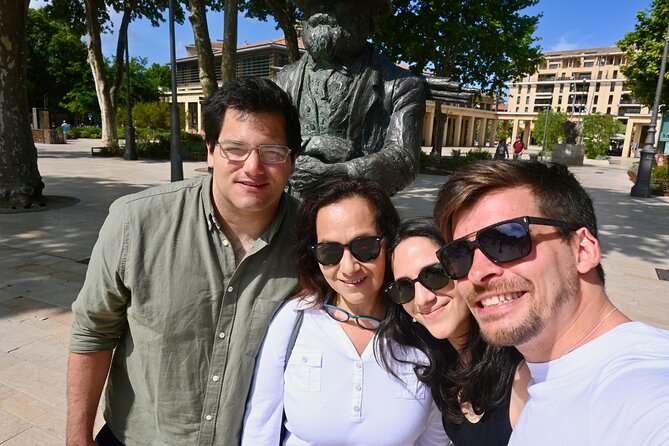
At Middle School Mignet, the focus shifts to famous Provençal figures—especially the stories connected to Paul Cézanne and Émile Zola. Even though the stop is only around five minutes, it’s the kind of short stop that adds “human scale” to the places you’ve been seeing.
Why this works: Aix isn’t just stones and fountains. The city’s identity is tied to writers and artists, and connecting those names to real locations makes it easier to remember what you learned and why the city mattered.
If you plan to visit museums or read about the region during your trip, this is a good early anchor point.
Quatre-Dauphins fountain: a photo moment with Baroque Italian style
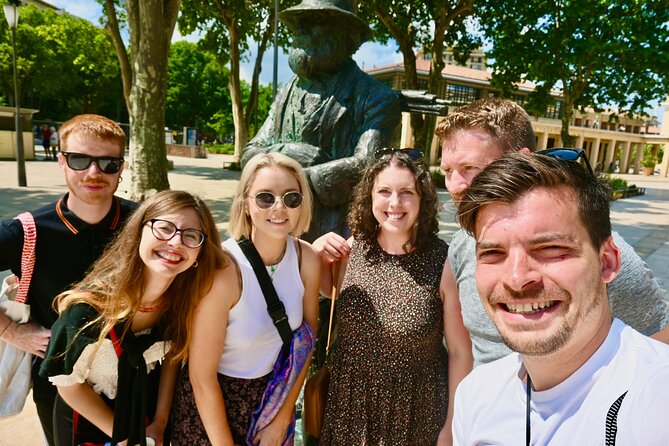
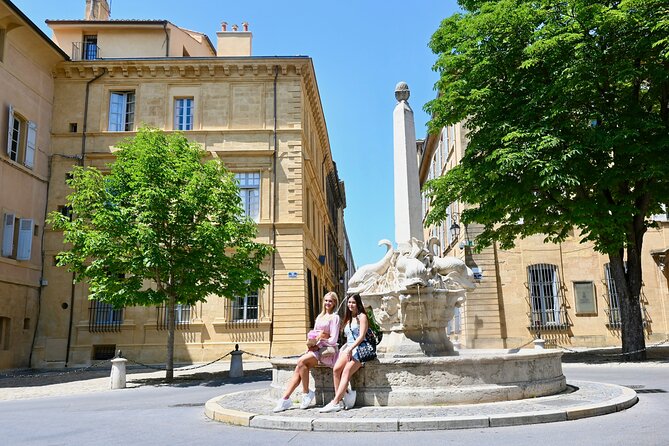
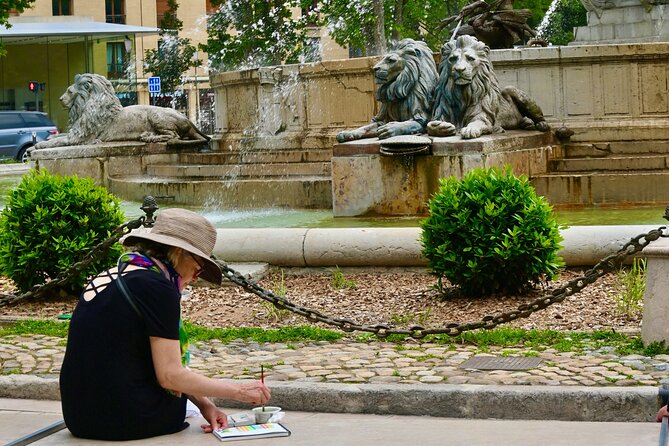
Then you’ll step by Fontaine des Quatre-Dauphins. This one is all about visual impact—Baroque Italian-inspired style and a chance to get a photo souvenir. The stop is short, but it’s designed for exactly that: pause, look, snap, and move.
Fountains are a theme on this walk, and the tour uses them as small “story chapters.” After you’ve seen La Rotonde and then Mirabeau, Quatre-Dauphins helps you spot the way Aix uses public art to shape the feel of everyday streets.
If you’re traveling with kids or anyone who needs short breaks, fountain stops are perfect. They’re quick, visual, and usually energizing.



Eglise Saint-Jean-de-Malte: church and fortress energy in one stop
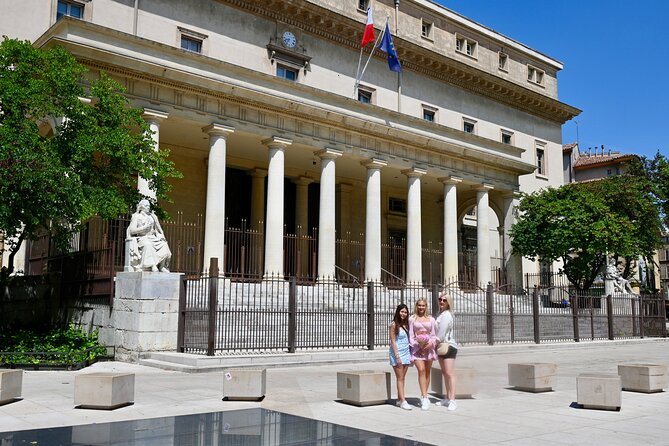
At Eglise Saint-Jean-de-Malte, you’ll hear what makes this site distinctive: it’s connected to the Knights Templars, described as a church/fortress. Expect about 10 minutes here, enough time for the big ideas without turning it into a museum-style visit.
This is a stop for people who like when architecture carries a story. You’ll see how religious sites in Aix weren’t just places of worship; they also reflect power, protection, and history written into stone.
It’s also a good moment for questions. A well-paced church stop is where guides often clarify what you’re seeing—so if anything feels confusing, ask here.
Rue d’Italie and calisson: the food stop that makes Provence tangible
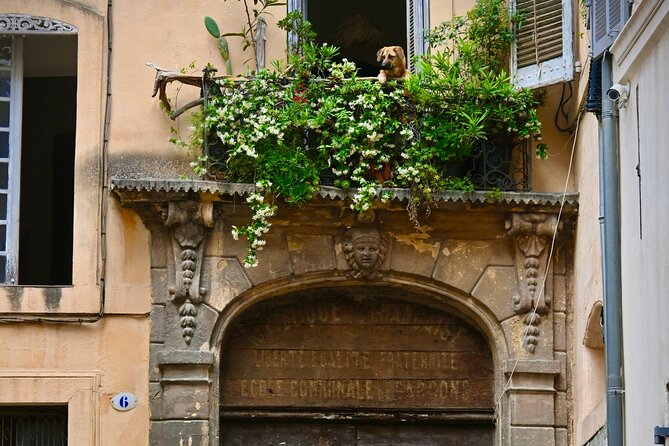
Now you get to the fun part: Rue d’Italie is where you’ll taste the local delicacy calisson. This stop is around 10 minutes and is set up specifically as a flavor lesson, not just a snack break.
Calisson tasting is one of the easiest ways to understand the region’s food culture without needing a restaurant reservation. And because it’s built into the route, you don’t have to detour or hunt for it later when you’re tired.
If you’re a foodie, you’ll appreciate how the tour balances “look” with “taste.” If you’re not a foodie, you’ll still enjoy it—small, quick, and distinctly local.
Passage Agard: walking through space and time
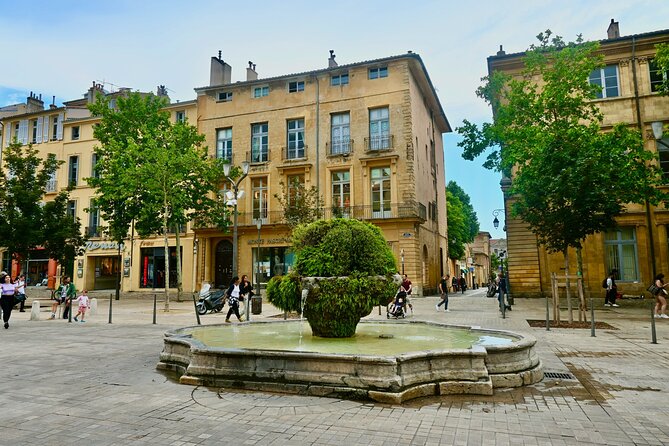
At Passage Agard, you’ll go through a hidden private passage that was once a convent. The time here is brief—about five minutes—but it’s a strong change of scenery from the open squares and main avenues.
These kinds of narrow, tucked-away passages are exactly what makes Aix feel different from larger cities. You notice details you wouldn’t spot on your own, like how buildings connect and how private spaces shaped daily life.
It’s also a nice “reset” stop. After the church and food moments, Passage Agard gives you a quiet visual interlude.
Place des Prêcheurs: court-house sightlines and statues in an open plaza
Next is Place des Prêcheurs, where you’ll check out the courthouse area, look for statues, and enjoy the open space of the plaza. The stop is about 10 minutes, and it’s likely to be one of those places where you’ll realize why guides love plazas: you can understand surroundings faster from a wider angle.
This stop helps you connect the city’s civic life to its public spaces. It also gives you a breather before the tour shifts into other neighborhood history.
If you care about photos, plazas are often where the light works best.
Rue du Puits Juif: medieval quarter stories you can actually place
At Rue du Puits Juif, the focus is a medieval quarter connected to Provençal Jewish communities and their influence on the region. You’ll get about 10 minutes here, enough to frame why this neighborhood matters and how it fits into Aix’s broader story.
This is the stop where the tour’s “history” side becomes more than dates. It’s about place-based memory—how a street name and a neighborhood layout carry meaning.
If you like your history grounded in streets you can point to, this section will stick with you.
Place Richelme: farmers market aromas (morning) and people-watching (afternoon)
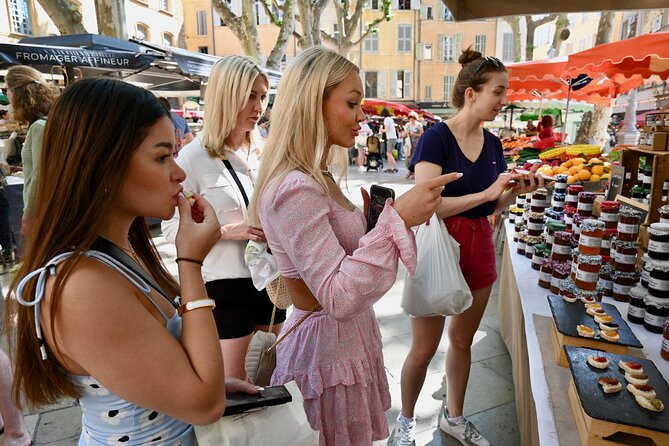
Then you reach Place Richelme, a short stop of about five minutes with a built-in choice depending on when you’re there. In the morning, the tour ties this spot to the daily farmers market and the sensory experience of tasting and smelling market foods. In the afternoon, it shifts toward watching people.
Either way, the stop reinforces the food culture thread. Even when you’re not eating at every stop, you’re learning how Aix’s daily rhythm feeds the atmosphere.
This is also an easy place to reorient. If you’re planning your own wandering afterward, you’ll often find it helps to end a guided loop near a lively plaza.
Town Hall and Place des Martyrs de la Resistance: civic Aix and WWII memory
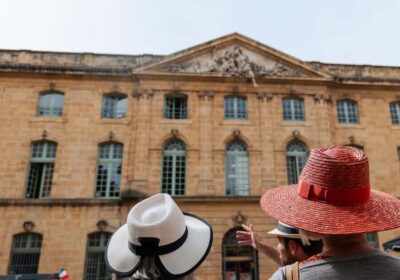
A couple of key civic and historical stops follow. First is the Town Hall of Aix-en-Provence, described as where the city’s mayor runs the show. It’s a short stop (about five minutes), but it signals that this tour is not only about ancient buildings—it also touches how the city operates.
Then comes Place des Martyrs de la Resistance, where you’ll hear survivors’ stories of the Second World War and how the US army liberated the city from Nazi control. The stop is about five minutes.
This part can hit harder than the fountain stops, in a good way. You’ll get context without turning the tour into something heavy or drawn out, but it’s still meaningful.
If you prefer tours that cover more than “pretty streets,” you’ll likely like the balance here.
Cathedrale St. Sauveur: the finish with opera-festival space and the Black Madonna
The walk ends at Cathedrale St. Sauveur. You’ll enter the cathedral, and the stop is designed to give you a sense of scale and significance: it’s described as a center of Christianity in the region for 1500 years.
You’ll also learn about specific highlights tied to how the space is used, including an open-air concert hall for the Opera festival. Another standout detail is the hidden statue of the Black Madonna.
This finish works well because it’s both visual and conceptual. After a route packed with small stops, ending at a major religious site gives your trip a natural “cap.” And because entry is included here, you’re not stuck looking only from the street.
It’s a great place to linger for a few extra minutes if the group pace allows.
Food, water, and keepsakes that keep the day light
This is not a dry history walk. Food shows up at sensible moments.
- Local delicacy taster: you’ll try calisson at Rue d’Italie.
- Farmers market tasters in the morning: the tour includes tastings tied to the market.
- Gelato discount in the afternoon: you’ll get a discount at a top gelato spot depending on timing.
- Bottled water isn’t provided, but you can fill your bottle at local water sources.
The included souvenir photo also matters. It’s a simple way to remember the day, and it helps if you’re trying to track what you did each morning and afternoon.
If you’re someone who hates carrying lots of stuff, this setup is friendly: small tastings, water option, and no long sit-down meal required.
Pace, walking comfort, and the small-group advantage
The tour runs about 2 to 3 hours and caps at 12 travelers. That small-group size makes a difference in a historic center. It’s easier for the guide to slow down if someone has a question, and it’s also easier for you to stay with the group.
The experience notes moderate physical fitness. In practice, that means you should expect steady walking between stops and some stairs or uneven surfaces in the old center. Bring comfortable shoes you’d wear for a solid urban day.
Weather is also key. The tour requires good weather, and if it’s canceled for poor weather, you’ll be offered a different date or a full refund. So check the forecast and plan accordingly.
Price and value: what $127.03 buys you in real terms
At $127.03 per person, this isn’t a “grab-and-go” activity. But the value comes from how much is folded in.
You get:
- a guided route through many core Aix sights,
- entrance to churches and entrance to the cathedral,
- the calisson taster,
- morning farmers market tastings (timing dependent),
- a gelato discount (also timing dependent),
- bottled-water-free hydration via water sources,
- and the souvenir photo.
When you price this out, it’s not only the guide time you’re buying. It’s entry fees plus planned food sampling, which can be expensive or hard to coordinate if you’re doing it on your own.
Also, you’re getting a tight loop through fountains, plazas, and neighborhood history in one go. If you only have a couple of days in Aix, this kind of structure helps you spend your limited time wisely.
When to book and how to fit it into a Provence plan
This tour is often booked about 45 days in advance, so I’d rather you book early than hope. If you’re arriving during peak periods, earlier is better.
Timing in your trip can matter. A tour like this works best when you do it early enough that you can return to things you liked afterward. Many people plan it as a first introduction to the city so the streets make sense later, or as a second-day deepening after they’ve already seen a few neighborhoods.
If you’re using Aix as a base for exploring Provence, you can also connect it to day trips. One note from the provided experience context: Aix is about a 35-minute train ride from Marseille, with trains running every hour. That makes it a realistic option for travelers combining the two cities.
Should you book this Aix walking tour?
Book it if you want a guided walk that feels both structured and personal. The small-group size, the fact that you enter major religious sites, and the inclusion of local tastings make it more than a sightseeing checklist. You’ll come away with a clearer mental map of Aix—plus stories about figures, neighborhoods, and key civic moments.
Skip it (or choose a different style) if you hate walking, dislike scheduled stops, or need long time inside museums and buildings. This route is designed as an efficient city loop, so it prioritizes many sights in a short window over deep, slow exploring of any one place.
If your goal is to get oriented, eat a little Provence, and understand what you’re seeing, this is a strong match.
FAQ
How long is the walking tour?
It runs about 2 to 3 hours.
Is the tour offered in English?
Yes, it’s offered in English.
What’s included in the price?
Entrance to churches and the cathedral, a local delicacy taster, a souvenir photo, water via local filling points, plus morning farmers market tastings and an afternoon gelato discount depending on timing.
Where do I meet the guide, and where does the tour end?
You start at the Tourist Information Center at 300 Av. Giuseppe Verdi and end at Paroisse Cathédrale Saint Sauveur Aix-en-Provence at 34 Pl. des Martyrs de la Resistance.
Is there a group size limit?
Yes. The tour has a maximum of 12 travelers.
What if the weather is bad or I need to cancel?
The tour requires good weather. If it’s canceled due to poor weather, you’ll be offered a different date or a full refund. You can cancel up to 24 hours in advance for a full refund.
More Tour Reviews in Aix en Provence

A Day Over in Aix-en-Provence
Just Added: Fresh Marseille Reviews









Aix-en-Provence Tours, compared.
 ★ 4.1Aix-en-Provence: Lavender Fields VisitFrom $11421 reviews
 ★ 5.0Luberon Villages Half-Day Tour from Aix-en-ProvenceFrom $127414 reviews
 ★ 4.8From Aix-en-Provence: Luberon Hilltop Villages Half-Day TourFrom $123369 reviews
 ★ 5.0Luberon Market & Villages Day Trip from Aix-en-ProvenceFrom $181250 reviews
 ★ 5.0Provence Lavender Fields Tour from Aix-en-ProvenceFrom $108241 reviews
 ★ 5.0Cotes de Provence Wine Tour from Aix-en-ProvenceFrom $119239 reviews
 ★ 4.5Cassis & Aix-en-Provence Half-Day TourFrom $116237 reviews
 ★ 4.7From Aix-en-Provence: Valensole Lavender Full-Day TourFrom $182222 reviews
Browse the lists this tour appears in