
Reviewed · AIX-EN-PROVENCE TOURS
Aix-en-Provence Scavenger Hunt and Sights Self-Guided Tour
Aix turns into a game. This self-guided walk is interesting because you move at your pace while the phone prompts you to find sights and earn points with creative photo tasks. I like that it’s built for active looking (the kind that makes you notice details you’d otherwise miss), but one drawback is that some questions can feel pretty basic for the price.
You start instantly after booking using an access code in the app, and the map helps you reach each place. It’s also a private experience, so your group stays together without mixing with strangers.
The route centers on major spots like Place d’Albertas and Cathédrale Saint-Sauveur, plus more squares along the way. Expect about 1–2 hours on average, and you can pause whenever you want—no race clock.
In This Review
- Key highlights worth your attention
- How this Aix scavenger hunt really works (and why it feels different)
- Getting started at Au Moulin de Mignet, and timing your walk
- Stop 1: Place d’Albertas missions (start strong with sight-hunting)
- Stop 2: Cathédrale Saint-Sauveur question stations (look for clues in plain sight)
- Place des Prêcheurs and the rest of the route (more variety than a straight list)
- The scoring system: hints, points, and why it makes you learn
- Price and value: is $11.93 per person a fair deal?
- Who should book this Aix hunt (and who should skip it)
- Should you book the Aix-en-Provence scavenger hunt?
- FAQ
- How long is the Aix-en-Provence scavenger hunt?
- What does the tour include?
- Where does it start, and where does it end?
- What language is the experience offered in?
- When can I play the tour?
- Do I need to reserve a specific time slot?
- Is it refundable if I cancel?
Key highlights worth your attention
- Photo missions that reward creativity, not just reading facts
- Question hunts where answers are often on-site (signs and displayed info)
- Map-guided navigation so you can actually find the next stop
- Walk-and-learn pacing that feels less like a lecture and more like a scavenger game
- Major Aix landmarks plus smaller squares to keep it varied
- Family-friendly fun with an app kids can handle
How this Aix scavenger hunt really works (and why it feels different)
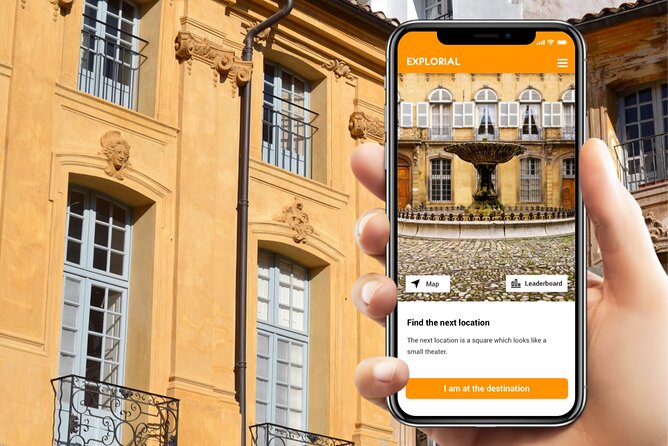
This isn’t a traditional guide walking you from point A to point B. Instead, you’re given a game structure that keeps you moving, looking, and solving. The app tells you when to use hints to locate a sight, then it switches to questions once you’re there.
I like this format because it pushes you to do two useful things at once: follow a route and inspect what’s in front of you. You end up learning while you’re hunting, not after you finish sightseeing. That matters in Aix, where the charm is in the street-level details—doors, plaques, street corners, and the little clues that explain how the city grew.
The game also mixes in photo tasks. If you enjoy composing shots—angles, playful interpretations, or just finding the right subject—you’ll likely have a better time. And because you earn points, the experience has a light competitive edge without turning stressful.
One thing to keep in mind: since it’s question-based, the value depends on your tolerance for prompts that are short and straightforward. If you’re the type who wants deep interpretive storytelling, you might find parts of it a little thin.
Over to Aix-en-Provence, more days out



Getting started at Au Moulin de Mignet, and timing your walk
Your starting point is Au Moulin de Mignet, 44 Bis Rue Mignet, 13100 Aix-en-Provence. The experience ends back at the meeting point, so you’re not left figuring out a return.
Timing is flexible. The tour isn’t limited in time, and it runs about 1–2 hours on average. You can stop for coffee, step inside a shop, or pause whenever the crowd or heat gets annoying. That’s a big deal in Aix, where you’ll often want to linger.
You also have a huge window for when you can play: the activity is listed as available Monday through Sunday, 12:00 AM to 11:30 PM (for the date range shown). Practically, that means you can choose a daylight or evening vibe depending on your schedule.
Logistically, you’re walking in a city setting with near public transportation, which helps if you want to combine this with other sightseeing. The experience is also described as suitable for most travelers, with service animals allowed.
Stop 1: Place d’Albertas missions (start strong with sight-hunting)
Your first location is Place d’Albertas. This square works well as a first stop because it gives you a clear visual target early on. The app-style flow typically means you’ll receive a hint, then use the map to find exactly where you need to look.
At places like this, I find these hunts do two things better than most casual wandering:
1) They make you look at the built environment like evidence.
2) They give you a reason to slow down rather than just pass through.
In this kind of square, your question prompts usually aim at what you can observe on-site—often the answer is tied to a sign, an image, or displayed information. If you like puzzles that feel grounded in what you can actually see, this is the part that tends to deliver the most satisfaction.
Photo tasks here can also be a good warm-up. You’re not just taking pictures; you’re trying to capture the subject the task wants. That turns normal snapshotting into a short creative challenge—and that’s where many people find the fun.
A practical consideration: squares can be busy. If you’re playing at a peak time, be ready to adapt angles and timing so you can both spot the subject and take your photo without feeling rushed.
Stop 2: Cathédrale Saint-Sauveur question stations (look for clues in plain sight)
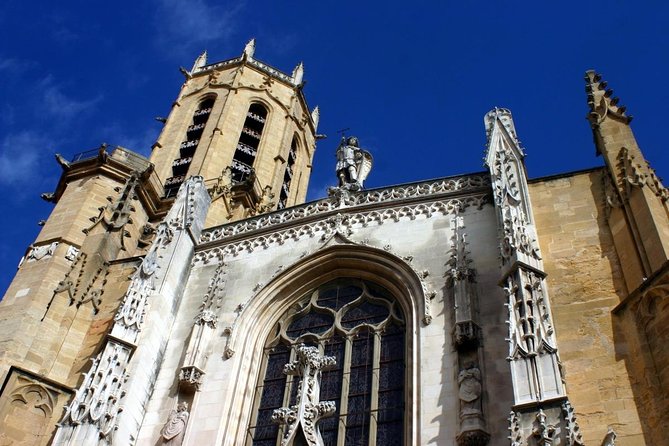
Next up is Cathédrale Saint-Sauveur. A cathedral stops the walk cold in the best way. Even if you’ve seen photos before, the real thing tends to make you notice scale, material, and layout.
Here, the scavenger format typically shines because it forces you to examine details rather than just admire the whole building. The questions are designed so the answers are often there on-site—hidden in signs or other displayed info. That means you’re not relying on random guesswork. You can usually confirm what you’re looking at, then move on.
One issue to watch for: at least some stops may be affected by restoration. If part of the cathedral area is covered or restricted, you might find the correct subject harder to access or harder to see clearly. That can slow you down, and it can also make certain prompts feel more frustrating than they should.
Still, this is a strong stop for anyone who likes a challenge that’s “solveable” with patient looking. You’re not just collecting facts. You’re practicing observation—which is a travel skill you can reuse all over the city.
Place des Prêcheurs and the rest of the route (more variety than a straight list)
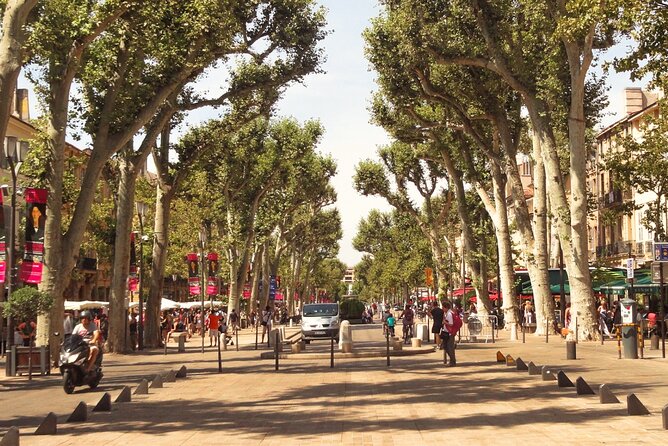
Beyond the two named anchors, the hunt includes other stops you reach as you go. Place des Prêcheurs is specifically mentioned as part of the experience, and there are additional places along the way.
This matters because Aix sightseeing can otherwise feel repetitive: same streets, same facades, same idea of what to photograph. By using multiple squares and sights, the hunt gives your brain a reason to keep shifting focus. One stop might reward you for noticing a layout or sign, another might ask you to hunt for a subject to frame in a photo task.
Also, the route is described as mixing well-known attractions with less obvious spots. You’ll likely pass through areas where normal sightseeing routes don’t always spend time. That’s one of the best ways a self-guided activity can help you feel like you actually got something out of the city, not just the highlights.
Another small reality check: because the exact number of stops beyond the named ones isn’t listed in detail here, your experience might feel more or less long depending on what’s accessible and how quickly your group solves the prompts. If you’re the type who likes to move fast, you may finish closer to the quicker end. If you love stopping to look around, expect it to stretch toward two hours or more.
Puzzle your way round the old town, more games



The scoring system: hints, points, and why it makes you learn
The core gameplay is built around three mechanisms:
- Find sights using hints (the map function helps you reach each place)
- Solve questions about what you see (answers often appear in signs, pictures, or displayed info)
- Earn points with photo tasks that ask you to be creative
What I like about this structure is that it creates a feedback loop. You’re not wandering without direction. Each prompt tells you what to do next, and the point system gives you a sense of progress.
It also makes learning feel active. Even if the questions are not highly technical, they still push you to connect the city’s look with some context. In plain terms: you end up noticing more on the second or third stop than you would if you were simply reading a brochure.
From the positive feedback I’m taking into account, the photo and humor-style elements are especially important. People often say the tasks are fun and effective for getting to know a place. In other words: you’re not just doing trivia. You’re doing a light challenge that nudges you to see Aix in a new way.
If you’re traveling with kids, this kind of structure can be a lifesaver. Clear tasks plus a straightforward app makes it easier for children to participate without constantly asking what’s next.
Price and value: is $11.93 per person a fair deal?
At $11.93 per person, this is priced like a low-cost activity. That can be a good sign if you want something that turns walking time into an experience you can actually finish in a couple of hours.
That said, value is personal. One concern raised is that some people felt the questions and instructions were too basic, and that the overall cost felt high compared to what they expected from the content. Another complaint notes that it ended up costing more when booking for only one person.
So here’s how I’d frame the decision:
- If you enjoy puzzles, photo challenges, and self-directed walking, it’s likely a good use of time at this price.
- If you expect something like a high-production guided tour with deep storytelling, you may consider it overpriced because the prompts can feel simple.
My practical advice: treat this as a playful way to “get your bearings fast” in Aix. You’re paying for engagement and route structure, not for a full, lecture-style explanation.
Who should book this Aix hunt (and who should skip it)

This is a great fit if you:
- Want a 2-hour activity that keeps everyone moving
- Like learning through observation and simple, on-site answers
- Travel with a partner or family and want shared tasks
- Prefer an app-based format where you can pause and restart without negotiating with a guide schedule
It’s also a solid pick for people who like the mental workout of “find the right thing.” One of the themes in positive feedback is that it makes you look harder at details. That’s the whole point.
Where you might reconsider:
- If you dislike apps or want a human to explain everything
- If you hate tasks that can feel overly straightforward
- If you strongly prefer a fully curated route with lots of stops (this one is more selective by design, and some stops can be affected by restoration)
If you’re mainly after scenic walking and café time, you may decide to do a self-guided walk without the hunt. But if you want your sightseeing time to feel structured and fun, this does that.
Should you book the Aix-en-Provence scavenger hunt?
Book it if you want a playful, low-pressure way to see Aix at street level—especially if you’ll enjoy photo tasks and on-site clue-finding at Place d’Albertas and Cathédrale Saint-Sauveur. It’s also a smart choice when you want a flexible time window and don’t want to commit to a rigid tour schedule.
Skip it if your idea of value is a deep, interpretive guided narrative, or if you know you won’t enjoy answer-finding and photo challenges. For those travelers, the experience may feel more like light entertainment than a serious historical tour.
If you do book, my best tip is simple: play it slow enough to actually look. The fun comes from noticing what the city puts in your path—then turning that noticing into a score.
FAQ
How long is the Aix-en-Provence scavenger hunt?
It averages about 1–2 hours, depending on your pace. It’s not limited in time, so you can take breaks.
What does the tour include?
You’ll use the app to find sights, answer questions tied to what you see on-site, and complete photo tasks that earn points.
Where does it start, and where does it end?
It starts at Au Moulin de Mignet, 44 Bis Rue Mignet, 13100 Aix-en-Provence, France and ends back at the same meeting point.
What language is the experience offered in?
The tour is offered in English.
When can I play the tour?
It’s listed as available Monday through Sunday, 12:00 AM to 11:30 PM within the date range shown.
Do I need to reserve a specific time slot?
The experience is described as starting when you’re ready to play after you download the app and use your access code. It’s not limited in time.
Is it refundable if I cancel?
Yes. Free cancellation is available. You can cancel up to 24 hours in advance for a full refund.
More Tour Reviews in Aix en Provence



Games and Treasure Hunts

A Day Over in Aix-en-Provence
Just Added: Fresh Marseille Reviews












Aix-en-Provence Tours, compared.
 ★ 4.1Aix-en-Provence: Lavender Fields VisitFrom $11421 reviews
 ★ 5.0Luberon Villages Half-Day Tour from Aix-en-ProvenceFrom $127414 reviews
 ★ 4.8From Aix-en-Provence: Luberon Hilltop Villages Half-Day TourFrom $123369 reviews
 ★ 5.0Luberon Market & Villages Day Trip from Aix-en-ProvenceFrom $181250 reviews
 ★ 5.0Provence Lavender Fields Tour from Aix-en-ProvenceFrom $108241 reviews
 ★ 5.0Cotes de Provence Wine Tour from Aix-en-ProvenceFrom $119239 reviews
 ★ 4.5Cassis & Aix-en-Provence Half-Day TourFrom $116237 reviews
 ★ 4.7From Aix-en-Provence: Valensole Lavender Full-Day TourFrom $182222 reviews
Browse the lists this tour appears in