
Reviewed · MARSEILLE LANDMARKS & HERITAGE
Historical visit/Treasure Hunt of Aix en Provence
Aix turns into a game of clues. This 2-hour historical walk is built around a treasure-hunt feeling, so you’re not just staring at pretty stone—you’re solving your way through Aix-en-Provence landmarks with Edouard. I especially like the way Edouard PAUL-CAVALLIER (Ted Aix Tours) threads big-picture context into small details you’d normally miss on your own. One possible downside: it’s timed, so if you want to linger forever inside one stop, this format may feel a bit brisk.
What I like most is the stop selection: La Rotonde’s sculptural symbolism, the church art stops, and the cathedral legend all land within a walkable loop. I also like the small-group size (max 10 people), which makes it easier to ask questions without losing the rhythm. The one consideration I’d flag is that admission at Hotel de Caumont is not included, so you may want to budget a little extra if you plan to go in.
In This Review
- Key things to know before you go
- Why this Aix treasure hunt feels different from normal sightseeing
- Getting oriented: the 2:30 pm start and a loop that ends at the cathedral
- Stop 1: Fontaine de La Rotonde and its star-shaped message
- Stop 2: Hôtel de Caumont in the Mazarin district (and why the courtyard-garden idea matters)
- Stop 3: Eglise Saint-Jean-de-Malte and Delacroix’s Crucifixion
- Stop 4: Fontaine des Quatre-Dauphins and the changing crown
- Stop 5: Cathedrale St. Sauveur and the Via Aurelia legend
- The treasure surprise at the end: how to get the most from the hunt
- Price and value: what $42.10 buys you in Aix
- Who this Aix treasure hunt is best for
- Should you book this Aix treasure-hunt walking tour?
- FAQ
- How long is the Aix-en-Provence historical visit and treasure hunt?
- What does the tour cost?
- Is the tour offered in English?
- Where do we meet, and where does the tour end?
- Is the ticket mobile or paper?
- Is admission included at every stop?
- How big are the groups?
- Are service animals allowed, and can most people participate?
- Is free cancellation available?
Key things to know before you go
- A treasure-hunt style route makes the walking more fun than a standard sightseeing chat.
- Small-group pace (max 10 people) helps you actually talk with Edouard.
- Multiple iconic fountains show up in one afternoon, with sculptural details you can spot and remember.
- Church and cathedral stops include specific artworks and stained glass moments, not just generic views.
- Hotel de Caumont requires extra admission, so plan for that if you want the interior.
Why this Aix treasure hunt feels different from normal sightseeing
This tour works because it turns the city into a puzzle. You’re moving through Aix’s center at a comfortable pace, but the experience is guided like a story you’re trying to finish. The result is that you come away with a mental map of where things are—and why they’re there—rather than a list of monuments.
Edouard’s approach also matters. He covers a lot of ground, but it doesn’t feel like a speedrun. You get time at each key stop to look closely, then you move on with context that makes the stonework and sacred art click. That is exactly the kind of guide value you want in a city where you could easily wander for hours and still miss the best bits.
And yes, there’s a treasure moment at the end. It’s the kind of small payoff that keeps the energy up during the walk without turning the whole thing into a gimmick.
Deeper into the Marseille story, more landmarks



Getting oriented: the 2:30 pm start and a loop that ends at the cathedral
The tour meets at 2 Place du Général de Gaulle in Aix-en-Provence at 2:30 pm, and it ends at Paroisse Cathédrale Saint Sauveur (34 Pl. des Martyrs de la Resistance). The whole experience is about 2 hours.
Starting in the afternoon can be smart. You avoid the most intense midday heat, and you still finish with enough time to grab a coffee, browse nearby streets, or continue your own walking afterward. The end point is also useful: when you wrap at the cathedral area, you’re right where you’d naturally want to explore more.
Practical tip: because this is a mobile-ticket experience, make sure your phone battery is healthy. If you prefer to keep things simple, turn on airplane mode after you arrive (so your ticket stays easy to access) and just use your phone for the tour.
Stop 1: Fontaine de La Rotonde and its star-shaped message
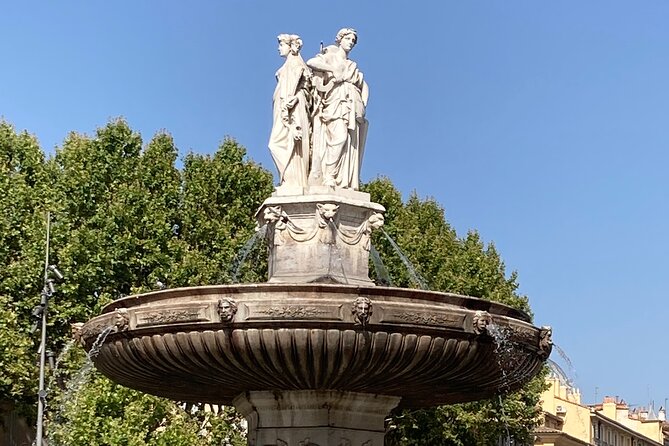
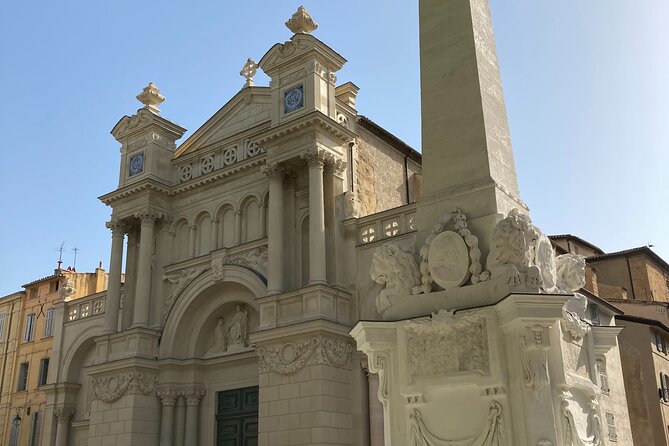
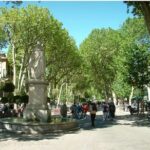
You kick things off at Fontaine de La Rotonde, a fountain that’s hard to ignore even before the guide starts talking. It’s about 12 meters high, built from cold stone, and it’s made up of two basins. Look up and you’ll see the animal-and-child sculptural themes—lions, dolphins, swans, and children—attributed to Truphème.
Here’s the part I loved: the statues on top aren’t random decoration. They form a kind of directional star pattern. One statue points toward Le Cours, another toward Marseille, and another toward Avignon, representing Justice, Agriculture, and Fine Arts. That “road star” idea helps you read the square like a civic map instead of just a landmark.
If you’re the type who normally walks past fountains because they feel similar, this stop changes that. You learn how the sculptural choices connect to how the city imagined itself—law, work, and creativity all anchored in one spot.
Time at this stop is brief (about 10 minutes), so come ready to look quickly: eyes up first, then down at the basins and animal figures.
Stop 2: Hôtel de Caumont in the Mazarin district (and why the courtyard-garden idea matters)
Next up is Hôtel de Caumont, in the Mazarin district. This is the kind of place that makes you understand why Aix feels elegant without trying too hard. The hotel is known for an architectural concept that’s described as being between courtyard and garden—an arrangement tied to Parisian influence in the 16th century, later adapted to local southern taste.
What I found useful is how the building tells a timeline. The “between courtyard and garden” scheme didn’t last in Aix the same way—it disappeared around 1680 in favor of hotels on the street, designed to look more distinct than the Parisian model. So when you see this structure, you’re seeing more than beauty. You’re seeing a pivot in how Aix built wealth and power.
There’s also a details-and-credibility layer. The carriage gate, facade, and wrought iron stair railing were listed in the additional inventory of Historic Monuments in 1925, and the entire hotel was listed in 1987. That’s the sort of information that makes the building feel anchored in real heritage, not just old-stone vibes.
One big practical note: admission here is not included. So if you want to step inside, treat it like an optional upgrade that you should plan for ahead of time.
Stop 3: Eglise Saint-Jean-de-Malte and Delacroix’s Crucifixion
At Eglise Saint-Jean-de-Malte, the tour shifts from outdoor symbols to indoor art. This church draws people for specific works, and the highlight is Delacroix’s Crucifixion, the painting that tends to attract the most attention.
There’s also stained glass, and not just any stained glass. One window dating from 1854 has the Baptism of Christ as its main theme. Even if you’re not a stained-glass expert, this gives you something concrete to look for instead of guessing what the “pretty windows” are about.
This is a good stop if you like religious art that still feels human and story-driven. It also works well in a treasure-hunt style because there’s usually something to spot—an image, a color pattern, a theme—before you move on.
Time here is about 15 minutes, with admission free, so you can step in, take in the main pieces, and keep the flow.
Over to Aix-en-Provence, more days out






Stop 4: Fontaine des Quatre-Dauphins and the changing crown

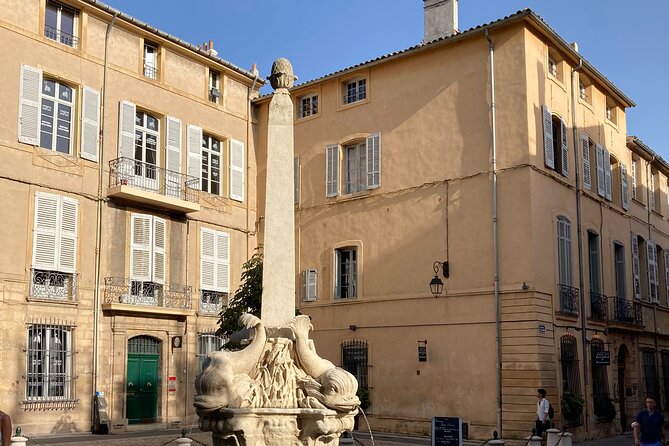
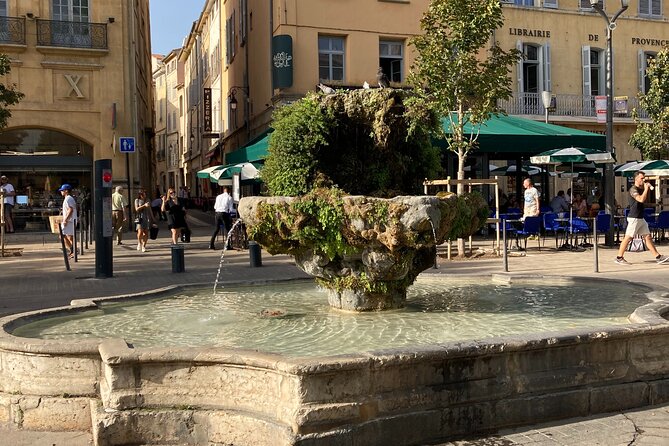
Then you move to Fontaine des Quatre-Dauphins. The fountain sits in the center of a square, and it’s attributed to sculptor Jean-Claude Rambot from 1667.
The design is memorable: four “architectural dolphins” circle a pyramid. Originally, the pyramid was topped with a statue of Saint Michael—but over time, the top was replaced by different symbols: a fleur-de-lis, a Maltese cross, then a pinecone.
I like this kind of detail because it turns a fountain into a timeline. If you only look at the architecture, you’ll think it’s just ornate. If you know the top has changed, you start seeing the fountain as a record of shifting tastes and meanings.
This stop takes about 10 minutes, and admission is free. It’s also one of those places where you can make quick mental snapshots: dolphins, pyramid, and then the “what used to crown it?” idea.
Stop 5: Cathedrale St. Sauveur and the Via Aurelia legend
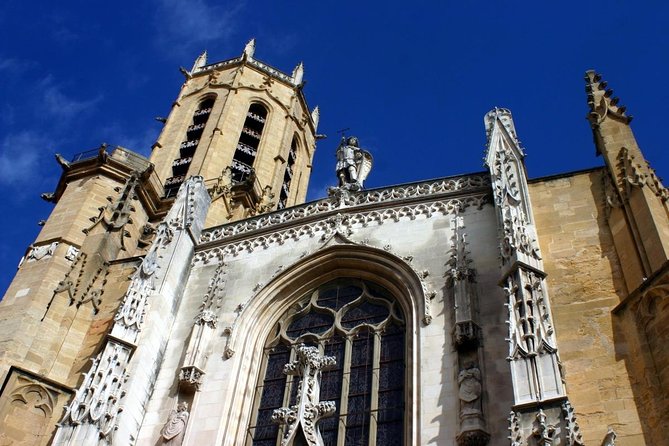
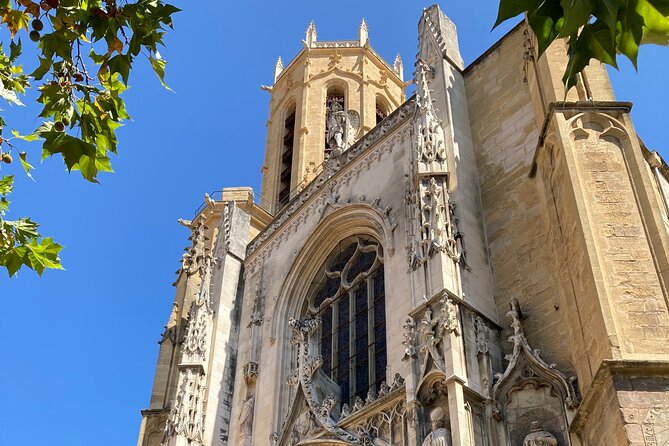
Your final big landmark is Cathedrale St. Sauveur. The tour connects it to a route called the old via Aurelia, which gives the cathedral a sense of long continuity. Even without deep archaeology talk, that connection matters: it helps you imagine the area before the cathedral existed.
There’s also a physical clue in the story. A fragment of Roman wall and columns of the baptistery seem to have fueled a legend that Saint-Sauveur was built on the site of an ancient temple dedicated to Apollo.
Historian Pitton (1654) is brought into the explanation. He claimed that the Apollo temple was dedicated to a solar deity, based on discovery of a statue with an uncovered thigh. Whether you treat the tale as literal history or as a period’s interpretation, it’s still the kind of legend that helps explain why people built—and believed—in a place like this.
Time here is about 15 minutes, and admission is free. If you’re a photo person, this is the stop where you’ll likely want one steady moment to look up at architectural lines, then look back down to notice transitions between Roman-style traces and later cathedral features.
The treasure surprise at the end: how to get the most from the hunt
The tour’s “treasure hunt” piece is intentionally light—think fun, not complicated. You’re walking through notable spots while looking for clues tied to what you’re seeing. The payoff is a small treasure surprise at the end, which adds energy in the last stretch and makes the final stop feel like a finish line.
To enjoy the hunt, I suggest two simple moves:
- Stay off autopilot. Pause for 10–20 seconds at each stop to actually look, not just listen.
- If you’re in a small group, ask questions early. When you understand what a guide is pointing at, the “clues” feel less like homework and more like discovery.
Also, a treasure hunt format tends to work great for mixed interests. If you’re traveling with someone who wants history and you want something lively, this style usually finds common ground. (Even if you’re not a puzzle person, the landmarks still deliver.)
Price and value: what $42.10 buys you in Aix
At $42.10 per person for about 2 hours, you’re paying for three things: a guided route, access to specific art and architectural context, and a small-group pace.
What makes it feel like good value is that the stops aren’t random. You get major Aix focal points in a tight loop: the fountain symbolism at La Rotonde, the architectural story at Hôtel de Caumont, the art anchors in Saint-Jean-de-Malte, and the cathedral setting that ties into ancient legend.
The one element that can affect your total value is the Hôtel de Caumont admission not being included. If you do plan to go inside there, factor that additional cost into your math. If you’re more “look from the outside, keep walking,” then you might find the tour’s included stops do most of the heavy lifting.
One more detail that hints at demand: this is often booked around 41 days in advance on average. If you’re traveling in peak season or on a day when you want this exact afternoon slot, you’ll likely have a smoother time booking ahead.
Who this Aix treasure hunt is best for
I’d point you to this tour if you want:
- A guided afternoon that covers the main sights without dragging
- An art-and-architecture focus that includes meaningful details (not just names)
- A small group experience with a guide who’s happy to explain and answer
It can also be a good pick if you’re visiting Aix early in your trip. When you see a city through a guided route first, later independent wandering tends to feel easier because you’ve already learned the “why” behind key places.
If you prefer to go super slow, sit in one church for a long time, or you love museum-style depth, you might find the pace a little tight. But for most people who want a smart, fun introduction to Aix, this hits the sweet spot.
Should you book this Aix treasure-hunt walking tour?
Yes, consider booking it if you want a lively way to learn Aix fast, with a guide who can make fountains, churches, and cathedral legends feel connected. The small-group size and the treasure surprise at the end give it extra energy, and the selected stops are the kind you’ll remember.
Just be sure you’re comfortable with a walking format and the fact that Hôtel de Caumont admission isn’t included if you decide to go in. If that matches your style, you’ll likely leave with a clearer sense of Aix—and a grin from finishing the hunt.
FAQ
How long is the Aix-en-Provence historical visit and treasure hunt?
The tour lasts about 2 hours (approx.).
What does the tour cost?
The price is $42.10 per person.
Is the tour offered in English?
Yes. The tour is offered in English.
Where do we meet, and where does the tour end?
You meet at 2 Place du Général de Gaulle, 13100 Aix-en-Provence and the tour ends at Paroisse Cathédrale Saint Sauveur Aix-en-Provence (34 Pl. des Martyrs de la Resistance, 13100 Aix-en-Provence).
Is the ticket mobile or paper?
You receive a mobile ticket.
Is admission included at every stop?
Admission is free at several stops, but Hotel de Caumont (Art Centre) is listed as admission not included.
How big are the groups?
The tour has a maximum of 10 people.
Are service animals allowed, and can most people participate?
Service animals are allowed, and the tour notes that most people can participate.
Is free cancellation available?
Yes. You can cancel for a full refund up to 24 hours before the experience’s start time.
Games and Treasure Hunts


A Day Over in Aix-en-Provence

Marseille Landmarks Up Close

Just Added: Fresh Marseille Reviews









Marseille Landmarks & Heritage, compared.
 ★ 4.3Mucem Skip-the-Line Entry TicketFrom $13619 reviews
 ★ 4.1Musée de l’Illusion Entry TicketFrom $22488 reviews
 ★ 4.5OM Stadium Tour at the Orange VelodromeFrom $20402 reviews
 ★ 4.8Confiserie du Roy René: gourmet guided tour of the calisson museumFrom $532 reviews
 ★ 4.5All Inclusive Food & History Tour of Marseille with Local GuideFrom $17927 reviews
 ★ 4.5History and Van Gogh in Provence from AIX-EN-PROVENCEFrom $18024 reviews
 ★ 4.4Cosquer Cave Ticket & Panier District Audio TourFrom $2717 reviews
 ★ 5.0Guided Tour in Aix-en-Provence: Historical Old CityFrom $6515 reviews
Browse the lists this tour appears in