
Reviewed · ARLES, LES BAUX & VAN GOGH PROVENCE
St Rémy de Provence & Arles Julius Caesar to Vincent Van Gogh
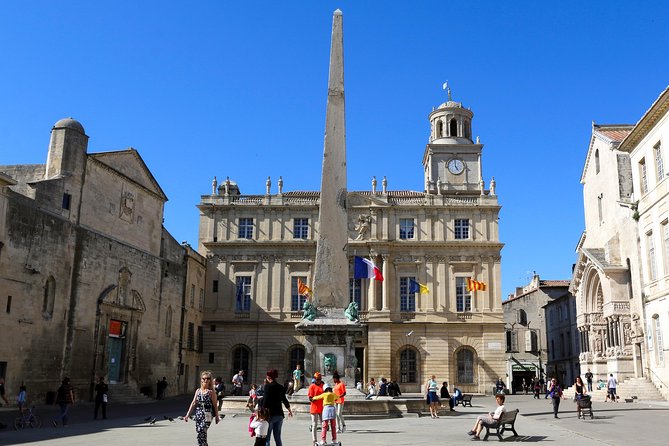
Roman Arles in a few hours is a time machine. This private tour connects Julius Caesar-era Arles with the UNESCO Roman Theater site, then adds the art trail behind Vincent van Gogh. I like that the pacing feels intentional, not rushed, and a guide keeps the big details clear as you walk.
I love tying the ancient sights to the art trail, especially the views at Saint-Paul de Mausole where Van Gogh worked. I also enjoy the stonework at Saint-Trophime, with its Romanesque cloister and church sculptures. One possible drawback: there’s no lunch, so you will want to plan for food on your own after the tour.
In This Review
- Key highlights to expect
- Arles, then Van Gogh: why this tour feels different
- Theatre Antique d’Arles arenas: Roman engineering you can walk
- Practical note on time and mood
- Saint-Trophime cloister and church: the Romanesque contrast
- What you should look for as you walk
- Saint-Paul de Mausole: Van Gogh’s workspace and the art therapy connection
- The views matter
- Saint-Rémy de Provence: narrow streets, Alpilles mountains, and market day
- A simple self-guided approach
- Transportation, comfort, and the private-tour advantage
- The downside of privacy
- Price and value: what $561 buys you in real time
- Who should book this Arles + Saint-Paul de Mausole tour
- The honest verdict: book it if you want meaning, not just photos
- FAQ
- How long is the tour?
- Where does the tour start?
- Is this a private tour?
- What’s included for tickets and admissions?
- Is lunch included?
- Are there refreshments during the tour?
- Does the tour use a car?
- Is there a mobile ticket?
- What are the main stops?
- Are service animals allowed?
Key highlights to expect
- UNESCO Roman arenas you can actually picture: You get the scale and layout, not just dates.
- A focused Romanesque stop: Saint-Trophime’s cloister and church are a great counterpoint to the arenas.
- Van Gogh at Saint-Paul de Mausole: The monastery setting helps you see what he saw.
- Saint-Rémy added for Provence flavor: Markets and narrow streets fit neatly into the half-day style route.
- Private-guide attention: The guide can steer the story toward what you care about most.
Arles, then Van Gogh: why this tour feels different
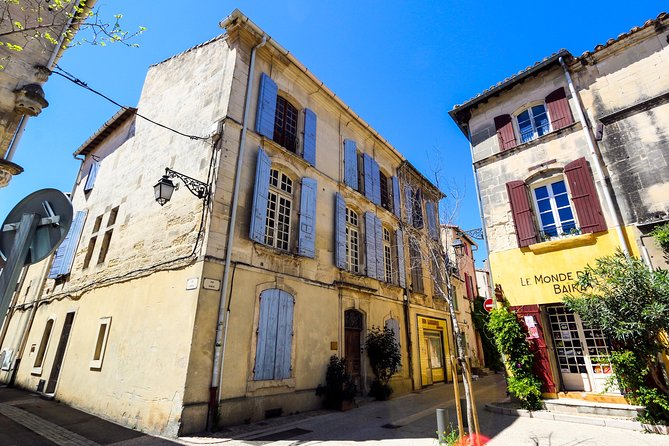
Arles is one of those Provençal towns where you can stand in one spot and feel multiple centuries pressing in at once. Roman architecture is right there in the open, and then suddenly you’re looking at the sort of quiet light and calm viewpoints that attracted Vincent van Gogh. The best part of this tour is that it doesn’t treat art like a separate ticket. It builds a link between the city’s form, its streets, and the scenes painters returned to.
I also like that you’re not doing this as a checklist. With a private guide (from OohProvence, including guides such as Christopher and Laurent), you get time to ask questions and to slow down when something clicks. You’ll be guided through major monuments, but you’ll also get help with how to read what you’re seeing.
West to Arles and Les Baux, more Van Gogh country


Theatre Antique d’Arles arenas: Roman engineering you can walk
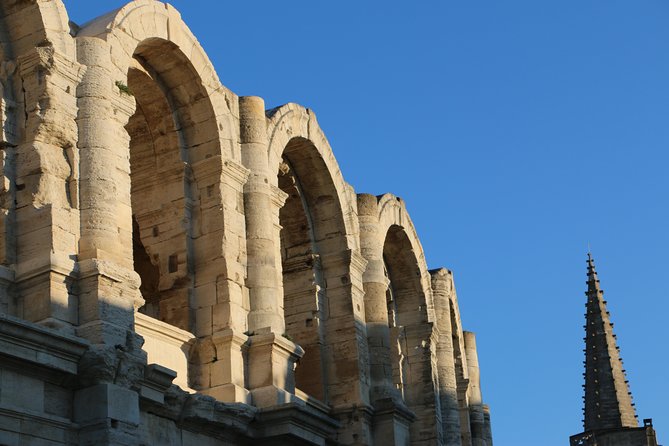
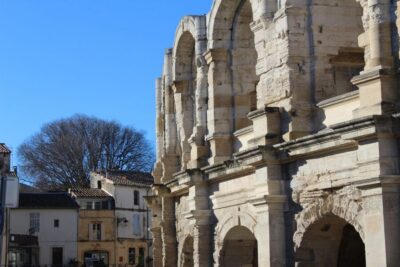
The main Roman stop is the Theatre Antique d’Arles, with the amphitheatre portion at the center of the story. This is the big, dramatic structure locals still refer to through its arena identity, and it’s easy to see why it became famous long after the Romans. You’ll stand on the monument’s axis and get a feel for how it was designed for mass spectacle.
Here’s what makes the architecture worth your time:
- It’s elliptical, with a major axis of 136 meters and a minor axis of 107 meters.
- Estimates put the original capacity around 21,000 spectators, and the viewing area was organized into multiple levels.
- The spectator space (known as the cavea) included 34 stands, grouped into four series according to social status.
- The circulation system mattered: doors, galleries, and stairways were planned so people could move in an organized way during events.
When you look closely, you start to understand that the building wasn’t only about size. It was about control and flow. That makes it more interesting than it might sound at first.
Practical note on time and mood
This stop is about 45 minutes. That’s enough time to grasp the layout and take in key angles, especially if you keep your questions tight and let the guide set the pace. If it’s hot, remember you’re outdoors and stone gets warm quickly. Bring sunscreen and wear shoes you don’t mind getting a little dusty.
Saint-Trophime cloister and church: the Romanesque contrast
After the amphitheatre, the tone changes fast—in a good way. Saint-Trophime is where Arles shows you a different side of its religious and artistic life. You’ll visit the Saint-Trophime Parish area (a cloister setting that dates from the 12th century) and then the Eglise Saint-Trophime, which was built between the 12th and 15th centuries.
This church is especially praised for its Romanesque sculpture. That matters because Romanesque art can feel decorative if you don’t have a guide pointing out what you’re looking at. With someone leading you through it, you’re more likely to notice how the carvings work—how they fit into the building, how they tell stories, and how they reflect a time when sculpture carried real weight.
What you should look for as you walk
A useful trick is to slow down and scan in layers. First look at the building form, then zoom in on details. Cloisters are perfect for that. You can stand, look around, and connect the architecture to the sculpture without rushing to the next stop.
This is also a relief after the Roman arena. The vibe is calmer, and it’s easier to take photos without competing with crowds.



Saint-Paul de Mausole: Van Gogh’s workspace and the art therapy connection
If your goal is to understand why people paint Provence, this is the star stop. Saint-Paul de Mausole is a former 12th-century monastery that’s still functioning today as a psychiatric health institution. That means you’re not visiting a museum set behind glass and silence. You’re visiting a living place with its own modern reality.
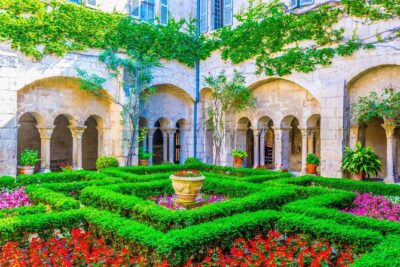
And yet, this is also where Vincent van Gogh spent just over a year. During your visit, you’ll move through areas like the former chapter houses and a Romanesque stairwell, where there’s a permanent exhibition connected to patient-created art from an art therapy studio called Valetudo. It’s not just a history stop. It’s a reminder that creativity is part of human life, not a postcard.
The views matter
The tour focuses on something practical and important: experiencing the viewpoints that Van Gogh saw and painted. That’s the difference between reading about him and actually standing where the light and sightlines come together. I find it helps to pause at each viewpoint long enough to compare your own first impression with what the guide explains.
This stop lasts about 1 hour, with admission included. If you’re a fan of Van Gogh, you’ll probably want to take it a touch slower—there’s a lot to take in without feeling like you’re speed-walking through art.
Saint-Rémy de Provence: narrow streets, Alpilles mountains, and market day
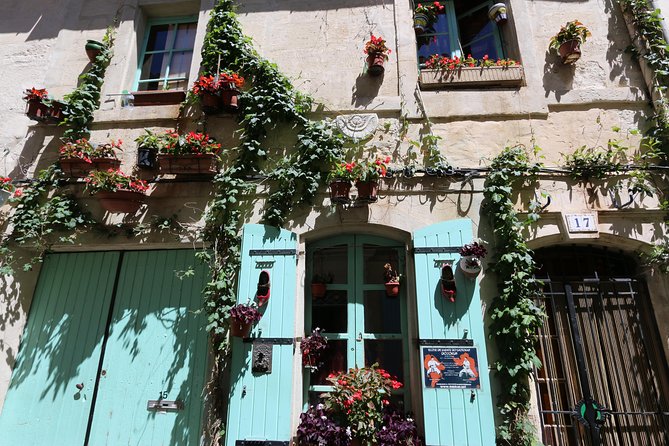
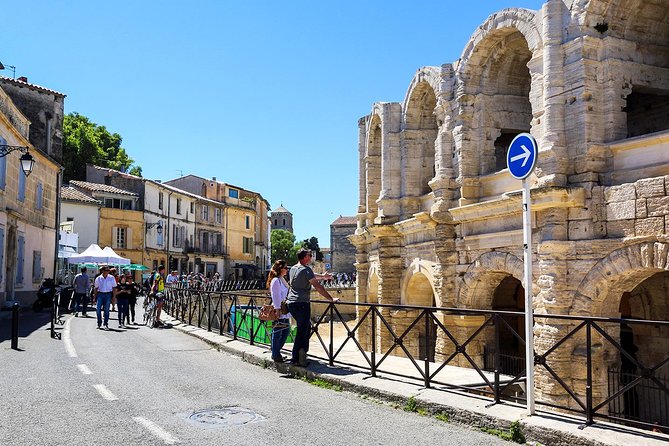
The last major town stop is Saint-Rémy de Provence, right in the Alpilles area. This is where the tour shifts into true Provence rhythm: old streets, low buildings, and mountain presence that changes how the town feels. You’ll have about 2 hours here, and admission is free for the time on your schedule.
A few things make Saint-Rémy worth the visit even if you’re not an art-hunter:
- It’s known as the birthplace of Nostradamus.
- On Wednesdays, the village hosts one of the best street markets in Provence.
- On other days, the town stays lively with small independent shops and galleries.
Even without a market happening, the street layout makes it easy to wander. If you like to browse instead of rushing, this is your window.
A simple self-guided approach
In your two hours, do a quick loop first so you get your bearings. Then pick one or two streets to return to. This helps you avoid the common mistake of walking in circles and feeling like you did something when you didn’t really notice anything.
Transportation, comfort, and the private-tour advantage
This experience runs from Marseille, France, and you get pickup offered plus an air-conditioned vehicle. You also receive bottled water, and there’s a coffee and/or tea break built in. Those small comforts add up when you’re spending hours hopping between sites.
Because it’s a private tour, you’re not dealing with the stress of herding a larger group. Your guide can adapt the pace to your questions. In practice, that means you’re more likely to get clear explanations without waiting for people who are still locating the meeting point.
You also get a mobile ticket, which can make entry smoother once you’re at the sites.
The downside of privacy
The tradeoff with a private format is that it’s still structured. If you’re hoping for totally free roaming all day, you may feel boxed in. This itinerary is built to cover major anchors, so it works best when you’re happy to follow a plan and then take your own time at the town segment.
Price and value: what $561 buys you in real time
At $561.13 per person, this is not a bargain-basement deal. The value comes from what’s included and from how the guide saves you time.
Here’s where the money goes:
- Admission is included for the Roman sites (the big Roman monument and Saint-Trophime area) and for Saint-Paul de Mausole.
- You also get a private guide, which changes the experience from looking to understanding.
- Transportation is handled with pickup and an air-conditioned vehicle.
- You receive bottled water and a coffee or tea break.
If you tried to do this on your own, you’d still pay for entries to key sites, and you’d spend mental energy figuring out timing between monuments. This tour compresses the decisions into one plan, so you can focus on seeing.
That said, if you already know you only want one site, this might feel expensive compared to a lighter itinerary. But if you want Roman Arles plus the Van Gogh connection and then some Provence wandering, the combined package starts to make sense quickly.
Who should book this Arles + Saint-Paul de Mausole tour
This tour is a strong fit if you:
- Want Roman ruins plus church art in one coherent route.
- Care about the Vincent van Gogh connection and like to see the viewpoints, not just hear stories.
- Prefer a guide to explain what you’re looking at so you don’t end up guessing.
- Like having a little structured time, then a freer window in Saint-Rémy.
It may be less ideal if you:
- Hate scheduled itineraries and want long, independent exploration only.
- Think you can just walk into major sites without any plan and expect everything to line up.
- Need a built-in lunch. This tour doesn’t include lunch, so plan food around the end.
The honest verdict: book it if you want meaning, not just photos
I recommend this tour when you want more than snapshots of Arles. The Roman arena stop gives you scale and design. Saint-Trophime brings you Romanesque art when your brain needs a change of pace. Then Saint-Paul de Mausole does the smart thing: it connects Van Gogh to the real setting he painted.
If you’re on a time crunch and you want a guide who can keep the story clear, this private setup is a good use of money. Just come prepared for the no-lunch reality, and you’ll leave with a stronger feeling for how Arles shaped both its own past and its artistic future.
FAQ
How long is the tour?
It’s listed as about 7 hours.
Where does the tour start?
The location given is Marseille, France, and pickup is offered.
Is this a private tour?
Yes. Only your group participates.
What’s included for tickets and admissions?
Admission is included for the Roman sites and for the cloister and church at Saint-Trophime, plus admission to Saint-Paul de Mausole.
Is lunch included?
No. Lunch is not included.
Are there refreshments during the tour?
Yes. The tour includes a coffee and/or tea break, plus bottled water.
Does the tour use a car?
Yes. There’s an air-conditioned vehicle.
Is there a mobile ticket?
Yes. Mobile ticket is included.
What are the main stops?
You’ll visit the Theatre Antique d’Arles (arenas amphitheatre area), Saint-Trophime Parish and Eglise Saint-Trophime, Saint-Paul de Mausole, and then Saint-Rémy de Provence.
Are service animals allowed?
Yes. Service animals are allowed, and most travelers can participate.
More Tour Reviews in Marseille

Arles, Les Baux and Van Gogh

Just Added: Fresh Marseille Reviews








Arles, Les Baux & Van Gogh Provence, compared.
 ★ 4.8From Aix-en-Provence: Arles, Les Baux, & Saint-Rémy Full-DayFrom $17577 reviews
 ★ 4.5Arles, Les Baux & Saint-Remy de Provence from AixFrom $17455 reviews
 ★ 4.5Avignon, Les Baux, St Remy and Arles from MARSEILLEFrom $18648 reviews
 ★ 4.5Arles, Les Baux and Saint Remy de Provence from MarseilleFrom $18540 reviews
 ★ 4.7Arles, Les Baux & Saint-Rémy Full-Day TourFrom $18239 reviews
 ★ 4.5History and Van Gogh in Provence from AIX-EN-PROVENCEFrom $18024 reviews
 ★ 4.8From Aix : Arles, Saint Rémy, & Les Baux Provence Day TripFrom $24716 reviews
 ★ 4.5Arles, Les Baux and Saint-Remy villages Full Day Trip from AixFrom $25215 reviews
Browse the lists this tour appears in