
Reviewed · PRIVATE MARSEILLE TOURS WITH A LOCAL
Marseille Guided Tour for 2.5 Hours with a Bilingual Local Guide
Marseille is a city you understand fast on foot. This 2.5-hour guided walk strings together the big landmarks and the everyday neighborhoods that explain why the Old Port matters so much. Our guide, Charles, tells the Marseille story in clear English while you move at a pace that makes the sights stick.
I love that the route is efficient—cathedral, Le Panier, La Canebière, Abbaye Saint Victor, and Palais du Pharo in one afternoon—so you get orientation without feeling rushed. I also like the practical wrap-up: you’ll receive an email with recommendations tailored to what you want to do next. The main catch is effort: there are some stair climbs and uphill bits, so wear shoes with grip.
In This Review
- Key highlights you’ll feel right away
- Walking Marseille from La Major to the Vieux-Port (Why this route works)
- Charles, your guide: small-group pace and story-first explanations
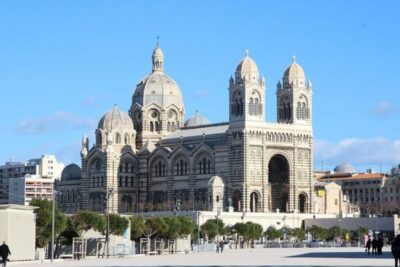
- Cathedrale de la Major: Neo-Byzantine scale and quick context
- Le Panier and Vieille Charité: narrow streets, layered cultures, and the hard parts
- La Canebière: the grand street that explains Marseille’s civic power
- Abbaye Saint Victor: Romanesque calm and the story behind la Navette
- Palais du Pharo: panorama strategy over Fort Saint Jean, MUCEM, and Cosquer’s
- Quai de Rive Neuve back to the waterline: port life in the 20th century
- Price and value: what $41.94 gets you (and why it feels fair)
- Timing and what to expect from a 2:30 pm start
- Practical tips: shoes, water, and how to use the post-tour email
- Who should book this tour
- Should you book this Marseille walking tour?
- FAQ
- How long is the Marseille guided tour?
- Where does the tour start and end?
- What is the meeting time?
- Is the tour offered in English?
- How big is the group?
- Are tickets or entry fees included for the stops?
- What’s included in the price?
- Do I need to bring lunch or water?
- What’s the weather requirement?
Key highlights you’ll feel right away
- A small group (max 8) means more questions and less crowd noise
- Charles’ storytelling makes places easier to remember, not just to see
- Free-entry stops keep the day simple and predictable
- Panoramic Old Port viewpoints from Palais du Pharo are worth the climb
- You finish at the Vieux-Port center, so dinner and transit are right there
Walking Marseille from La Major to the Vieux-Port (Why this route works)
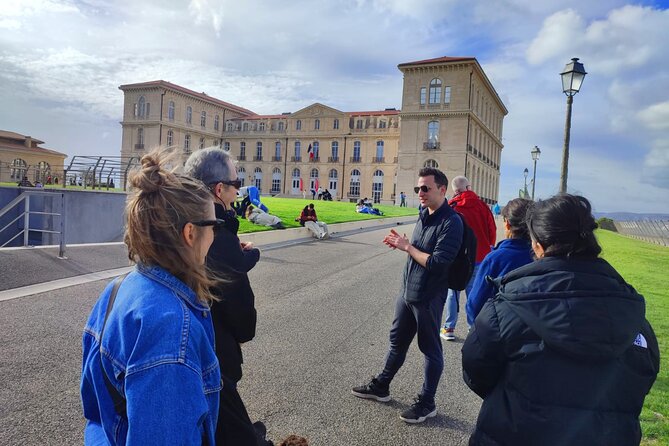
If you’ve only got one afternoon, you want two things: good coverage and a sense of where you are. This route does both. You start at Cathedrale de la Major in the 13002 area, then work your way down toward the Old Port, ending at the heart of Vieux-Port where it’s easy to continue exploring on your own.
What I like about this kind of layout is how it builds mental map skills. You see how Marseille’s religious sites, working-port streets, and hillside viewpoints connect to the same waterfront story. Even if you’re not trying to “tour,” you’ll leave with names you can actually use when you ask for directions or plan your next meal.
Your own guide, more private Marseille days



Charles, your guide: small-group pace and story-first explanations
This isn’t a giant bus-group shuffle. The group size is capped at 8 people, which matters more than you’d think. When the guide asks the group to look at a detail—architecture lines, a street trace, a view direction—you don’t lose the moment to crowd gaps.
Charles also brings a light, friendly tone. In the reviews, you can see the same pattern: no dead air, lots of humor, and a steady rhythm that keeps the walk from turning into a lecture. If you want a guide who talks like a person rather than a script, this is that kind of tour.
And you get more than what happens on the street. You’ll receive an email after the walk with recommendations that fit what you’re interested in—food, sights, and how to pace your day.
Cathedrale de la Major: Neo-Byzantine scale and quick context
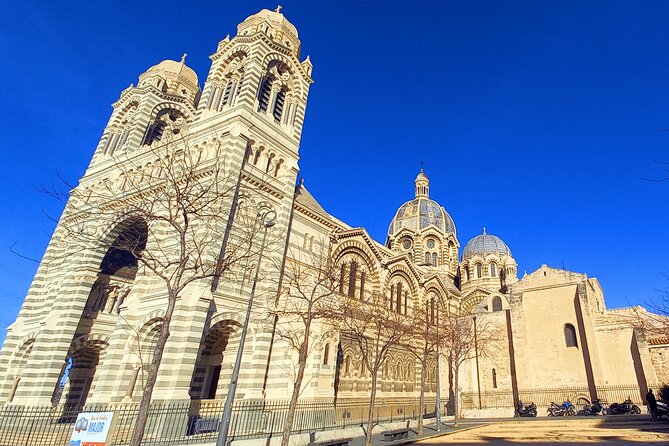
Your first stop is Cathedrale de la Major, a striking structure in Neo-Byzantine style. The timing is short, but that’s intentional. You get an introduction to why this cathedral looks the way it does, and how it fits into Marseille’s long sequence of cultural influences.
This is a good “warm-up” stop because it gives you a strong visual anchor early. Once you’ve seen the cathedral’s scale and style, the rest of the afternoon feels more connected—religion, civic life, and the port all start to make sense as part of the same city machine.
Practical note: because this is an outdoor-to-indoor kind of start, it’s smart to take a minute before you enter to locate the best angles for photos and architectural details.
Le Panier and Vieille Charité: narrow streets, layered cultures, and the hard parts
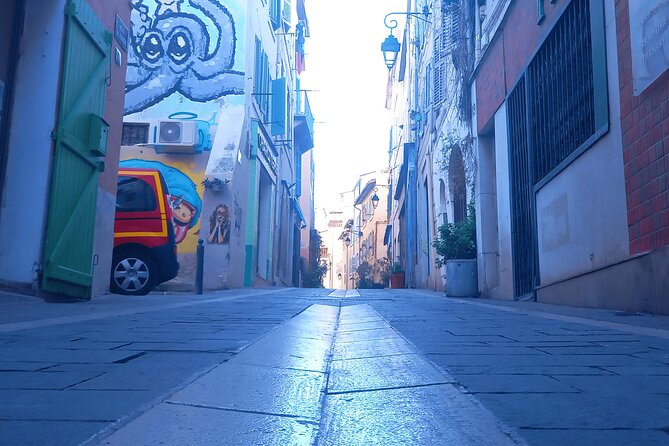
Then you move into Le Panier, Marseille’s famous old district with tight lanes and colorful buildings. It’s the kind of place where getting lost is easy, but the guide keeps you pointed toward the story. The time here is longer, because it’s where Marseille’s identity shows up most clearly in the street plan itself.
A major focus is Vieille Charité, including the hospital history and the tragic experiences tied to older events in the area. You also hear about Marseille’s Greek and Roman heritage, with references to landmarks dating back to the fifth century B.C. You’re not just looking at walls—you’re learning what those layers mean.
What makes Le Panier especially valuable on a guided walk is balance. Yes, it’s scenic and photo-friendly, but the tour doesn’t skip the difficult side of the city’s past. That makes the neighborhood feel real, not just picturesque.
La Canebière: the grand street that explains Marseille’s civic power
Next comes La Canebière, the big famous street that runs near the Old Port zone. This stop works well because you’re moving, not waiting around. You stroll from north toward the south shore of the harbor area and learn how the city organized itself along this corridor.
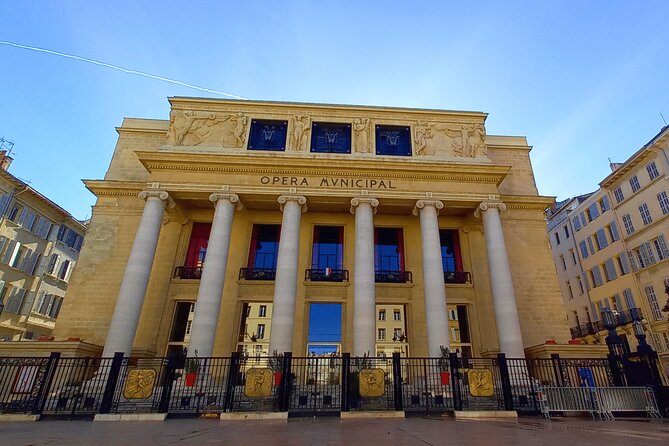
The guide points out significant monuments nearby, including the Chamber of Commerce, the Opera House, and older former shipyard references. That line-up matters. You’re seeing how commerce, performance, and maritime industry sit close to each other—because in Marseille, they historically always did.
If you’re the kind of traveler who enjoys “why does this building exist” questions, you’ll like this part. It turns a street you might otherwise walk past into a map of civic priorities.
Hand it to a local, more relaxed days



Abbaye Saint Victor: Romanesque calm and the story behind la Navette
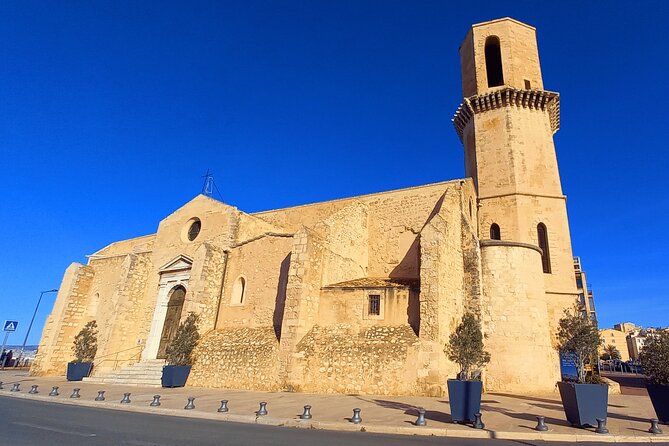
At Abbaye Saint Victor, you shift from street life into a quieter, older atmosphere. The buildings reflect Romanesque style, and the location near the Vieux-Port means you can feel how the monastery functioned in the city’s earlier rhythms.
Two things make this stop more than a quick sight. First, you get stories about Marseille’s past through the lens of the monastery. Second, you also learn about la Navette, a Marseille specialty tied to a bakery tradition said to be the oldest in the city.
The tour explains what inspires the shape and tradition of la Navette. Even if you don’t plan to eat right away, understanding the origin makes it easier to recognize when you encounter it later. And because this is a walking tour, that sort of cultural detail often lands better than a standalone food stop.
Palais du Pharo: panorama strategy over Fort Saint Jean, MUCEM, and Cosquer’s
Then you rise to Palais du Pharo, perched on a promontory with sweeping views over the Old Port. This is one of the tour’s best moments because it gives you distance. From here, Marseille stops looking like disconnected neighborhoods and starts looking like a single harbor system.
The guide uses the view to reference landmarks around the water: Fort Saint Jean, the MUCEM, and Cosquer’s museums. You’ll likely recognize a few of those names later as you explore independently, and the viewpoint helps you place them in your head.
This stop also comes with gardens and an elegant historic palace feel. It’s not just about looking. It’s about learning which direction the city turns and how the waterfront story flows.
Quai de Rive Neuve back to the waterline: port life in the 20th century
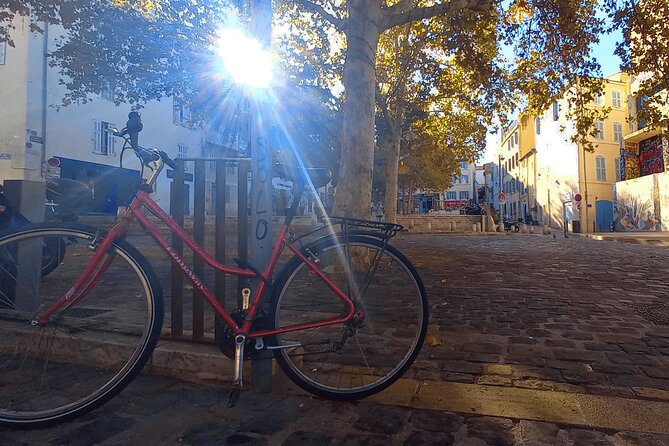
The final leg returns you to the harbor via Quai de Rive Neuve, the south dock. Here the pace is lighter, and the focus shifts to port history—especially how the area changed during the 20th century.
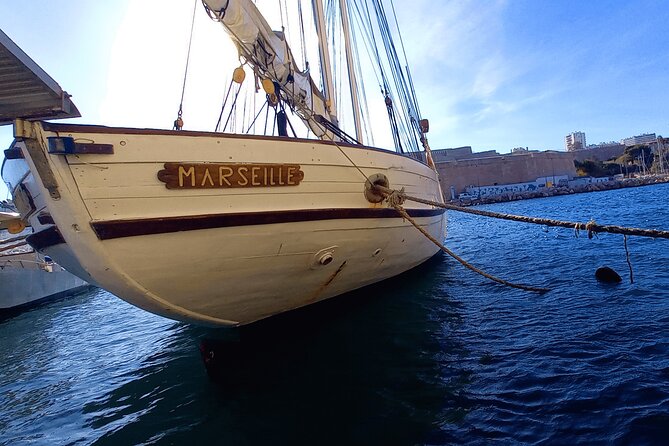
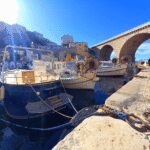
You’ll walk past the docked boats and get a sense of how the port functions day to day, not only as a backdrop. This matters because the Old Port in Marseille isn’t just a pretty place; it’s a living working zone, even when it’s tourist-heavy.
At the end, you’re dropped right at the Vieux-Port center, a convenient crossroads. That makes this tour a strong “start here” choice for your trip, because you can head straight to dinner, a boat, or a next neighborhood without guessing where everything is.
Price and value: what $41.94 gets you (and why it feels fair)
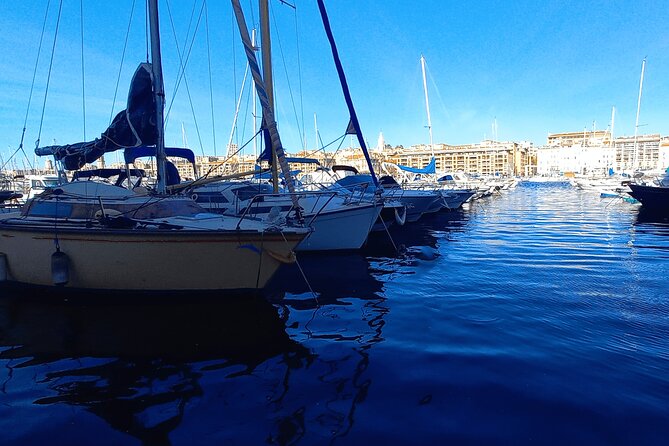
At $41.94 per person for roughly 2 hours 30 minutes, the big value isn’t the number alone—it’s the mix of coverage and interpretation. You’re paying for a local guide who connects architecture, street layout, and port history into a coherent story while you move between sites efficiently.
The stops are also designed to keep the day smooth. Major entrances on the route are marked as free, so you’re not juggling ticket purchases while trying to keep your group moving. Lunch isn’t included, but that’s often a plus on a walk like this because you can choose where to eat based on what you’re craving after the sights.
Most importantly, the tour ends where you’ll actually want to be later: in the middle of the Old Port area. When a tour finishes at a practical location, it reduces wasted time and makes the day feel like it produced more than photos.
Timing and what to expect from a 2:30 pm start
This tour starts at 2:30 pm. Afternoon walking in Marseille can be comfortable, but you’ll still want to plan for changes: light shifts, potential late-day crowds near the port, and any temperature swings.
The itinerary timing is built around short explanation stops and longer neighborhood time. The longest chunk is Le Panier, where you need more minutes to see street patterns and absorb the stories tied to the district. The viewpoints and major landmarks are shorter but timed well, so you get the important angles without losing momentum.
Because the walk includes some steep sections, the best strategy is to accept that you’ll work a little. If you pace yourself, the stairs stop being a problem and become part of the fun—the payback is the views from Palais du Pharo.
Practical tips: shoes, water, and how to use the post-tour email
Two practical realities show up clearly in the experience experience description and the feedback. First: bring good walking shoes because there are stair climbs. Second: bottled water and lunch aren’t included, so plan your own. Even if you don’t want a full meal, a small snack can make the afternoon feel easier if you’re sensitive to energy dips.
You’ll also get recommendations by email at the end. Use that immediately. Don’t save it for later when the day becomes busy. If the message includes options for food and follow-up sights, pick one main plan and one backup. Marseille is full of choices, and having a small plan prevents decision fatigue.
Who should book this tour
This works especially well if you’re:
- visiting Marseille for the first time and want orientation fast
- the type of traveler who likes stories behind buildings, not only the buildings
- coming with one afternoon to cover the Old Port area and surrounding viewpoints
- okay with some stairs and uneven old-district streets
It may be less ideal if you need a mostly flat route, or if you prefer long museum stops rather than a moving walk.
Should you book this Marseille walking tour?
I’d book it if you want the best combo of city context and memorable viewpoints without spending your entire day on logistics. The small-group size, Charles’ story-driven guiding style, and the finish at the Vieux-Port center make it a smart first-afternoon move.
If stairs are a concern for you, don’t panic—just go in prepared with proper shoes and a slower pace. And if you’re the kind of traveler who always asks what something means—why it was built, what it replaced, what happened here—this tour is built for that.
If you want a Marseille “map in your head” after only a couple of hours, this is one of the better ways to get there.
FAQ
How long is the Marseille guided tour?
It runs about 2 hours 30 minutes.
Where does the tour start and end?
It starts at Cathédrale La Major, Pl. de la Major, 13002 Marseille, and ends in the Vieux-Port area (13002 Marseille).
What is the meeting time?
The start time is 2:30 pm.
Is the tour offered in English?
Yes, the tour is offered in English.
How big is the group?
The tour has a maximum of 8 travelers.
Are tickets or entry fees included for the stops?
Admission tickets for the listed stops are free.
What’s included in the price?
You get a private guided tour with a local guide, plus an email with individual recommendations after the tour.
Do I need to bring lunch or water?
Lunch and bottled water are not included.
What’s the weather requirement?
The tour requires good weather; if it’s canceled due to poor weather, you’ll be offered a different date or a full refund.
Let a Marseille Guide Lead


More Tour Reviews in Marseille




Your Own Marseille, Just Your Group



Just Added: Fresh Marseille Reviews












Private Marseille Tours with a Local, compared.
 ★ 4.9Urban Hiking Tour with a Local GuideFrom $46198 reviews
 ★ 4.5Welcome to Marseille: Private Tour with a LocalFrom $55110 reviews
 ★ 5.0Tailored Wine Tasting Experience in Top Wine ShopFrom $94106 reviews
 ★ 5.0Marseille Guided Tour for 4 Hours with a Bilingual Local GuideFrom $60105 reviews
 ★ 4.5Marseilles: Private Custom Tour with a Local GuideFrom $5397 reviews
 ★ 4.5Private tour in Aix-EN-Provence, Marseille and Cassis!From $60358 reviews
 ★ 5.0Aix-en-Provence, Cassis, Marseille – Private Tour From MarseilleFrom $1,15855 reviews
 ★ 4.5Provence : Aix en Provence, Cassis and Marseille Private TourFrom $1,02053 reviews
Browse the lists this tour appears in