
Reviewed · MARSEILLE CITY SIGHTSEEING
Marseille: Half-Day City Highlights Guided Walking Tour
Marseille can feel chaotic. This 4-hour walking tour turns it into a clear, story-driven route led by Charles with a small group of up to 8.
What I like most is the mix of set-piece landmarks and the side streets you’d miss on your own, plus the big payoff viewpoints. You get real perspective on Marseille’s 2600-year history while keeping the pace friendly for questions and pauses. One heads-up: it’s a 9-kilometer walk with steps and hills, and you’ll want proper shoes, sun protection, and your own water.
In This Review
- Key Highlights You’ll Feel in Your Day
- Starting at La Major: Where Your Marseille Story Begins
- Le Panier and Hôtel de Ville: Old Streets, City-Scale Lessons
- The Ferry Moment and Le Vieux Port: Working Water, Not Just Views
- Cours Honoré d’Estienne d’Orves and Colline Puget: From Streets to Skyline
- Notre-Dame de la Garde: The View That Explains Everything
- Rolling Down the Hills Toward Vallon des Auffes
- Corniche Kennedy and Plage des Catalans: Sea Air, City Lines
- Palais du Pharo and Saint Victor’s Abbey: Big Architecture, Real Atmosphere
- Finishing at Le Vieux Port: Your Marseille Map Locks in
- How the 9-Kilometer Walk Really Feels (and What to Bring)
- Price and Value: Is $58 Worth It?
- Who Should Book This Marseille Highlights Walk?
- Should You Book This Marseille Tour?
- FAQ
- Where is the meeting point?
- How long is the tour?
- How much walking is included?
- What languages are available?
- Is food or drink included?
- Is the tour suitable for everyone?
Key Highlights You’ll Feel in Your Day
- Charles’s high-energy, story-first guiding in English or French (bilingual format)
- Le Panier’s maze of pedestrian-only streets and neighborhood character
- Panoramas from Notre-Dame de la Garde with a built-in break to take it all in
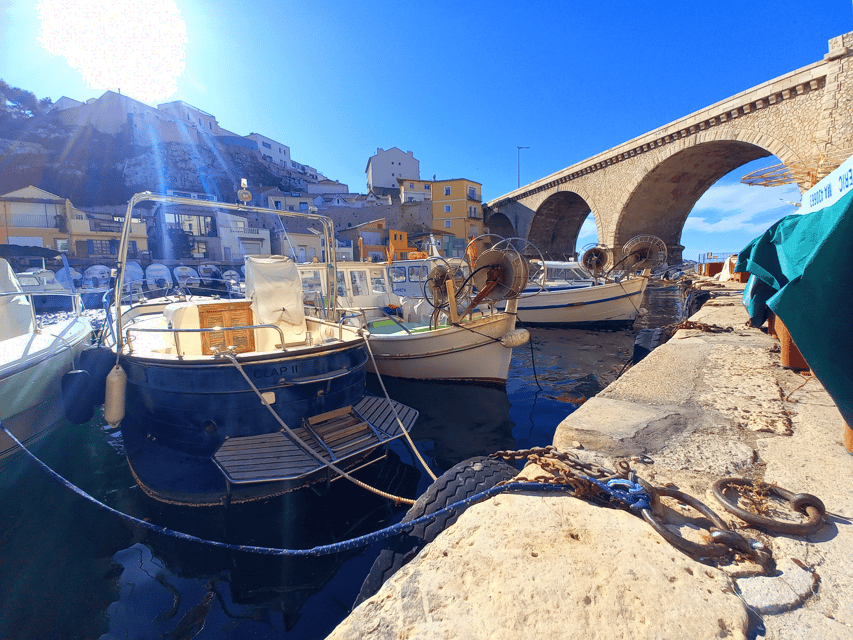
- Vallon des Auffes as a small fishing cove moment after the city hustle
- Sea-and-city views along the Corniche and Plage des Catalans stretch
- A quick ferry ride that breaks up the walking and adds fun
Starting at La Major: Where Your Marseille Story Begins
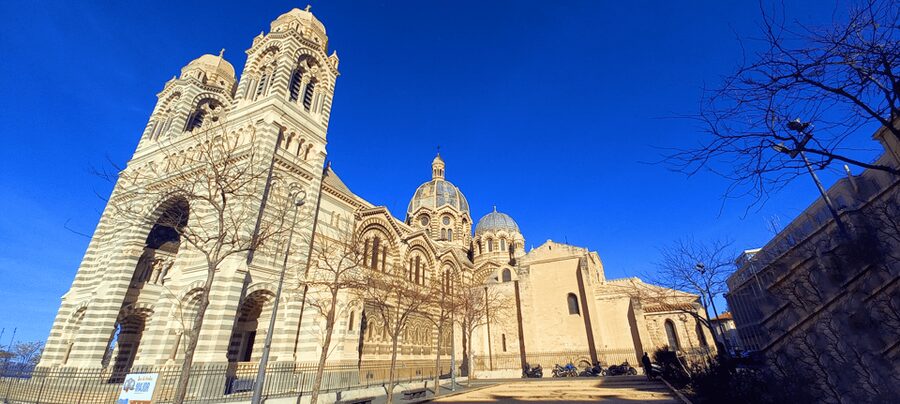
The day kicks off in front of Cathédrale Basilique Sainte-Marie-Majeure, known as La Major. This is a smart starting point because it helps you orient fast: you’re at a key religious landmark while you learn how Marseille’s different eras stack up across the city.
From there, the tour moves into the nearby cathedral area for a short guided stop. It’s not just a photo break. You’ll get context for what you’re seeing and why this city keeps layering new life onto older places.
Why that matters for you: Marseille’s streets can feel like a puzzle. A good start makes the rest of the route click. And since the guide is bilingual (English and French), it’s easier for every group member to stay with the story, not just the sights.
The whole city in one go, more ways to see it

Le Panier and Hôtel de Ville: Old Streets, City-Scale Lessons
Next up is Le Panier, the older, hill-hugging neighborhood that feels made for walking. You’ll spend a longer guided stretch here, which is exactly what you want. Narrow lanes, corners, and little changes in street character tell you a lot about Marseille’s history and everyday life.
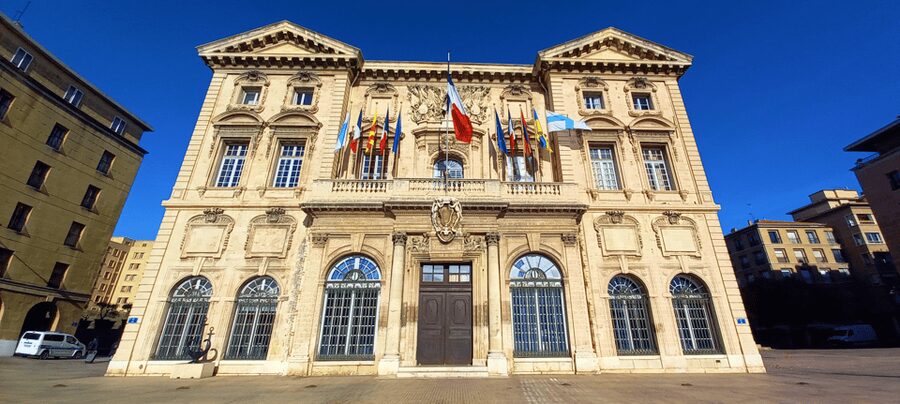
Then you pass through the area around Hôtel de Ville. Even with a brief stop, it adds another layer: the city isn’t only old churches and scenic coves. You also see Marseille as a living place with civic landmarks that shape how people move and gather.
One drawback to note: Le Panier involves plenty of uneven walking. Even if the pace is reasonable, this is a neighborhood where you’ll feel your footing. Bring shoes with real grip.
The Ferry Moment and Le Vieux Port: Working Water, Not Just Views
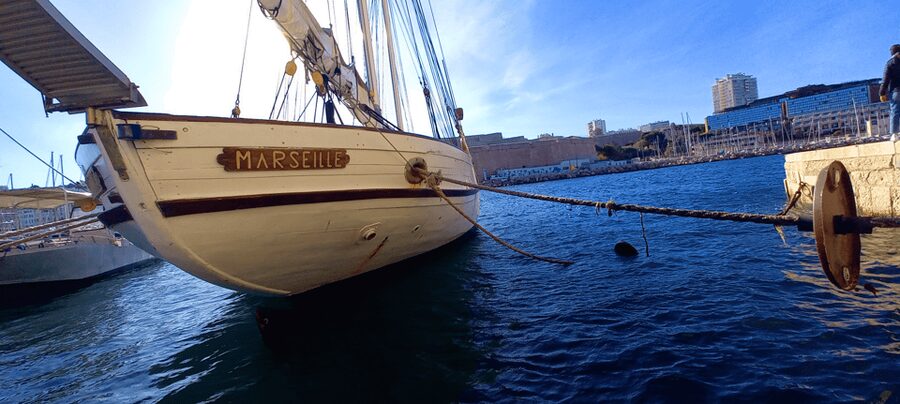
Marseille’s Old Port is famous, but the tour approach is what makes it worthwhile. You don’t just look at it; you learn how the port fits into the city’s identity.
You’ll also take a short ferry boat segment—just a few minutes—guided and quick enough to keep the day flowing. That tiny water break matters. It resets your legs and gives you a different angle on the port area before you continue.
Then you step through the Old Port zone with a guided walk. It’s a classic Marseille scene: boats, movement, and that unmistakable “this city runs on the sea” feeling. If you’ve only got a short time, this is the part that helps you understand why Marseille has the attitudes and rhythms it does.
Cours Honoré d’Estienne d’Orves and Colline Puget: From Streets to Skyline
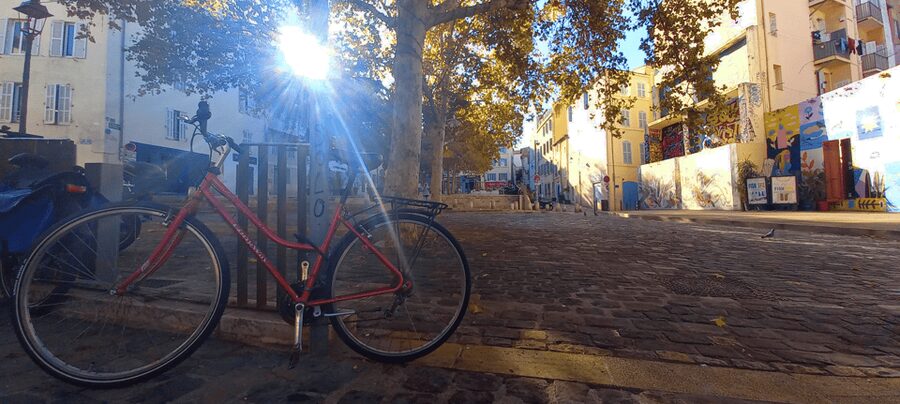
After the port, the route shifts toward the city’s in-between zones—street lines, urban viewpoints, and the gentle change from dockside to hillside. Cours Honoré d’Estienne d’Orves is one of those stops that works well on a walking tour because it’s a connector. You’ll get guided perspective while you move, not just when you stop.
Then comes Parc de La Colline Puget. You’ll spend time here looking out and catching the city from above. This is also a smart place to pause and let Marseille “settle” in your mind. After all the street turns, you start seeing the city as shapes: water, hills, and neighborhoods arranged like a living map.
Practical note: this is one of the segments where you’ll feel the day’s total distance. It’s not a marathon, but it’s not a stroll either.
Notre-Dame de la Garde: The View That Explains Everything
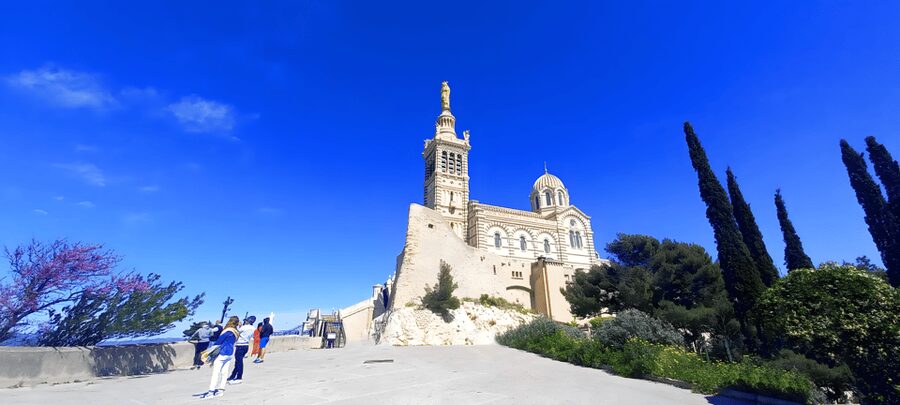
The big highlight step is the ascent to Notre-Dame de la Garde. This is where the tour earns its nickname as a Marseille highlights walk with real payoff.
You’ll have a guided visit, then a planned break with time to simply take in the panorama. From up here, Marseille makes sense in a way it rarely does at street level. You can see how the coastline curves, how neighborhoods sit in relation to the sea, and how elevation changes what the city feels like.
This stop is valuable because it’s both visual and interpretive. It’s not only, Look at the view. It’s, Here’s how the city grew, and why these vantage points matter.
What to do during the break: don’t rush it. If the day is sunny (and it often is), use that time for photos, a short rest, and a quick scan of the coastline. You’ll understand the later stops better once you’ve “seen” the city from above.
Marseille at walking pace, more routes





Rolling Down the Hills Toward Vallon des Auffes
After the heights, the tour continues with more guided walking through the city’s changing feel. You’ll move through another stretch that lets the story keep updating—Marseille isn’t one neighborhood, it’s a set of worlds connected by streets.
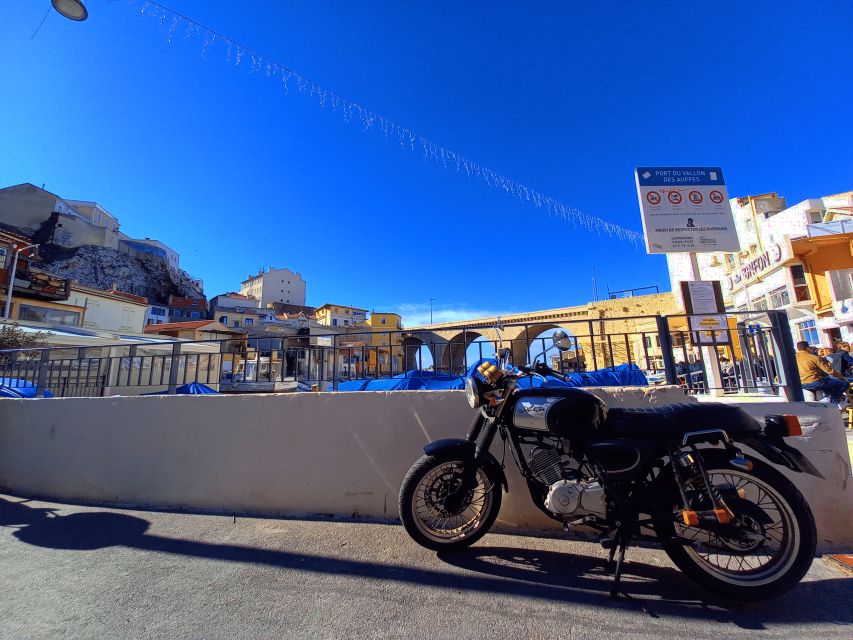
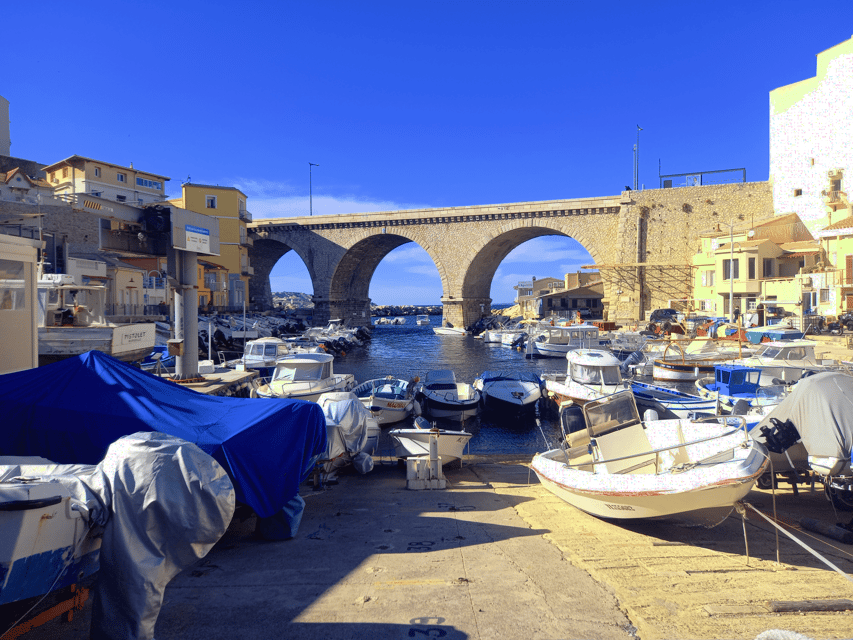
Then you reach Vallon des Auffes. This is a quieter, more intimate moment: a small fishing port tucked into a rocky cove. It’s the kind of place where the city sounds change. Instead of major streets and crowds, you get a slower rhythm that feels more local than postcard.
If you want Marseille with contrast, this is the stop. You’ll appreciate it even more if you came hoping for something beyond Le Vieux Port and big churches.
Corniche Kennedy and Plage des Catalans: Sea Air, City Lines
Next comes the Corniche John Fitzgerald Kennedy, followed by Plage des Catalans. Together, these are the route’s “edge of the city” segment—sea views, salt air, and a sense of where the city turns into coastline living.
The guided stops here work because they connect what you see to how Marseille lives with water. You’ll also have short pauses for sightseeing, which helps when you’re balancing walking with photo time.
Practical tip: bring your sunglasses and sun hat. You’ll likely be exposed during these open-view stretches, especially on a bright morning.
Palais du Pharo and Saint Victor’s Abbey: Big Architecture, Real Atmosphere
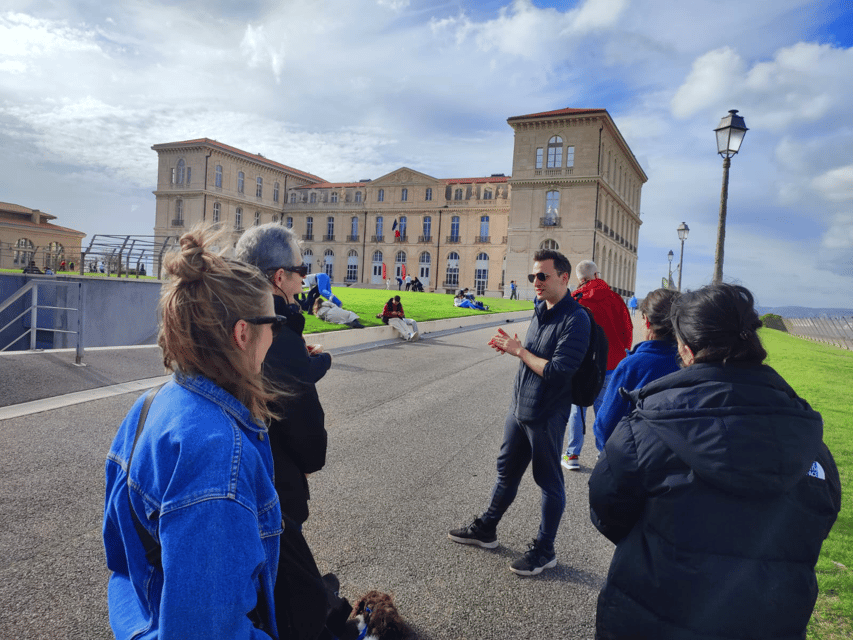
Palais du Pharo is one of those stops where you slow down. It’s an architectural presence, and you’ll get guided context that makes it more than a pretty building. Marseille has a way of mixing grand forms with everyday life, and this is a good example.
Then the route continues to Saint Victor’s Abbey for a longer guided visit. Abbey time adds a different flavor to the day because it shifts from sea-and-city angles to spiritual and historical grounding. You’ll get stories connected to the site as you move through the space.
Why this works at the end of the tour’s middle: you’re already tired enough to appreciate a guided pace, but not so worn out that you miss the details. It’s a good balance point before the finish.
Finishing at Le Vieux Port: Your Marseille Map Locks in
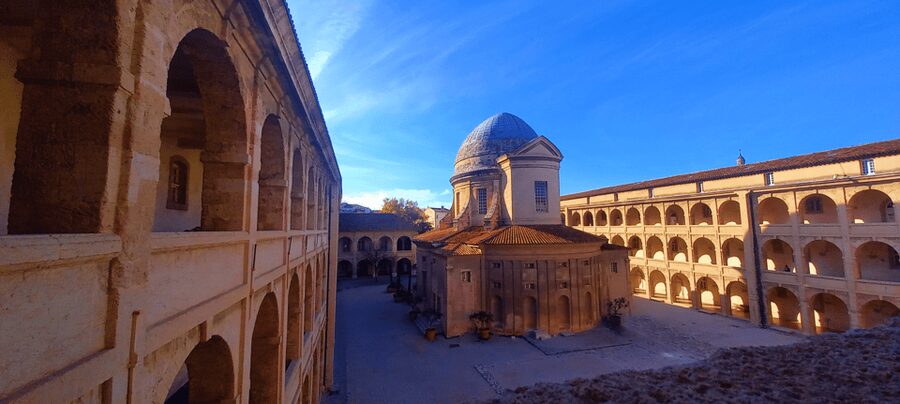
The tour ends back near Le Vieux Port. That closing loop is helpful for you because it ties the earlier port views to everything you saw afterward—hills, viewpoints, abbey interiors, and the fishing cove.
By the end, you’re not only checking off landmarks. You’re walking away with a mental map of how Marseille’s neighborhoods connect.
And because you’ve walked through so many different “Marseille moods,” you’ll be able to choose where to return later—whether that’s another waterfront hour, more time in Le Panier, or a second look from higher ground.
How the 9-Kilometer Walk Really Feels (and What to Bring)
This experience covers about 9 kilometers over roughly 4 hours, so think “active sightseeing,” not museum time. The walking includes steps and hills, and Le Panier and the climb to Notre-Dame de la Garde are the parts that add the most effort.
Here’s what I’d plan for, as a practical checklist:
- Hiking shoes with grip (you’ll be glad you brought them)
- Sunscreen + sun hat + sunglasses (open viewpoints make sun protection worth it)
- Water and a snack from your own supplies (food and drink aren’t included)
If you need rests, you can step out and re-join at another location. That’s a big deal for comfort because it keeps you from feeling like you must push through. But the overall distance still matters.
Also note: this tour isn’t for wheelchair users, and it’s not a good fit for low fitness levels or very limited mobility. If that’s your situation, you’ll probably enjoy Marseille more with a shorter, less hilly format.
Price and Value: Is $58 Worth It?
At $58 per person for a half-day, you’re paying for a guided route that includes both major landmarks and the connecting neighborhoods that make Marseille click. The small group size (max 8) helps a lot: you’re more likely to get questions answered and stay engaged without feeling like you’re part of a crowd.
You’re also getting a guided visit at Notre-Dame de la Garde and a short ferry boat segment included in the flow. Those two pieces alone add time and structure you’d have to plan yourself if you DIY.
What’s not included is food and drink, so you’ll want to budget a little for what you carry. But the upside is flexibility—bring what suits you, and you’re not stuck with a set meal option.
For first-time visitors who want the right mix of highlights plus local street sense, I think the price is fair. For people who hate walking or don’t want hills, it’s not the best value, because the effort is real.
Who Should Book This Marseille Highlights Walk?
This tour is a great match if:
- You want an introduction to Marseille that goes beyond the obvious skyline pics
- You like neighborhood wandering with a story (especially Le Panier and the route’s hidden-feeling streets)
- You enjoy viewpoints and sea air, with Notre-Dame de la Garde as the anchor
- You want a guided format that keeps you moving without rushing you
It’s not the best match if:
- You want minimal steps or flat walking
- You need a fully accessible route
- You’re not comfortable with about 9 kilometers of walking in a city built on hills
Should You Book This Marseille Tour?
If you’re visiting Marseille for a short time and you want a smart route with a guide who’s lively and friendly, this is an easy yes. The highlights are genuinely well chosen: La Major to Le Panier to the Old Port, then heights at Notre-Dame de la Garde, and later Vallon des Auffes, the Corniche, and St Victor’s Abbey. You’ll come away feeling like Marseille has layers, not just landmarks.
But be honest with yourself about the walking. If hills and steps are a challenge, you’ll enjoy the experience less. For the right fitness level and attitude, though, this tour gives you a lot of Marseille per hour—plus the kind of neighborhood context that helps you plan the rest of your trip.
FAQ
Where is the meeting point?
You meet right in front of Cathédrale Basilique Sainte-Marie-Majeure, also called La Major. The guide will be wearing a white cap.
How long is the tour?
The walking tour lasts about 4 hours.
How much walking is included?
The tour covers about 9 kilometers.
What languages are available?
The tour guide offers English and French.
Is food or drink included?
No. You’ll need to bring your own drinking and eating supplies in your backpack.
Is the tour suitable for everyone?
It’s not suitable for children under 12, wheelchair users, people with low level of fitness, or people over 70.
More Tour Reviews in Marseille

Marseille at Walking Pace

Marseille, End to End

Just Added: Fresh Marseille Reviews








Marseille City Sightseeing, compared.
 ★ 3.8City Sightseeing Hop-On Hop-Off Bus TourFrom $272,820 reviews
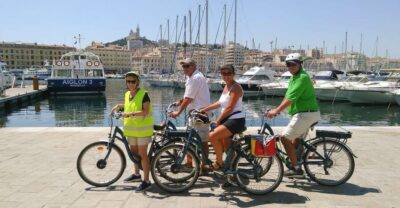 ★ 4.8City Highlights Guided Half-Day E-Bike TourFrom $67325 reviews
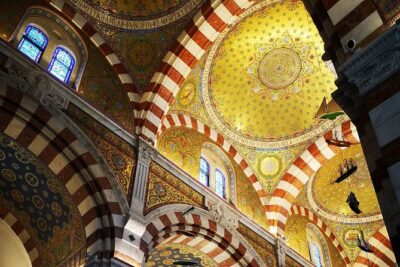 ★ 4.0Marseille Shore Excursion: City Sightseeing Tour of MarseilleFrom $96321 reviews
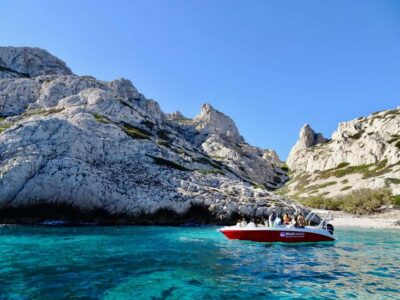 ★ 4.8Iconic Calanques Boat Tour with SwimmingFrom $90281 reviews
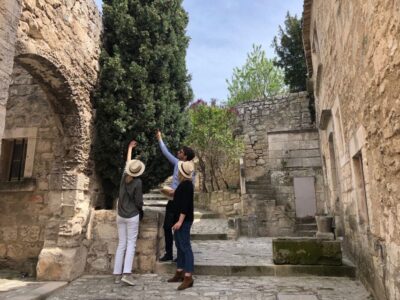 ★ 4.7Provence Sightseeing Tour and Wine TastingFrom $199195 reviews
 ★ 4.9Essential Guided Walking Tour of the CityFrom $41161 reviews
 ★ 4.9Sightseeing E-Bike TourFrom $58161 reviews
 ★ 4.5Cassis and Aix en Provence Sightseeing Tour from MarseilleFrom $162132 reviews
Browse the lists this tour appears in