
Reviewed · MARSEILLE CITY SIGHTSEEING
Marseille: Essential Guided Walking Tour of the City
Marseille has layers, and this walk shows them fast. You start at La Major and, with local guide Charles, get a guided look at 2,600 years of Greek, Roman, and modern Marseille stories in about 150 minutes. The pace is friendly, the route is manageable, and the history comes with real-life street context.
I especially like how this tour mixes neighborhood mood with big-picture events. Le Panier delivers art-filled stairways and hillside calm, while the walk also pulls in the Port’s maritime roots and the city’s WWII past. The one real drawback is simple: it is not for wheelchair users, and you’ll want comfortable shoes for roughly a 5 kilometer walk.
In This Review
- Key things I’d plan around
- Start at La Major, then let the city explain itself
- Le Panier and Church of Accoules: the hillside side of Marseille
- Rue de la République: where everyday Marseille shows up
- Vieux Port and the forts: maritime Marseille in one harbor walk
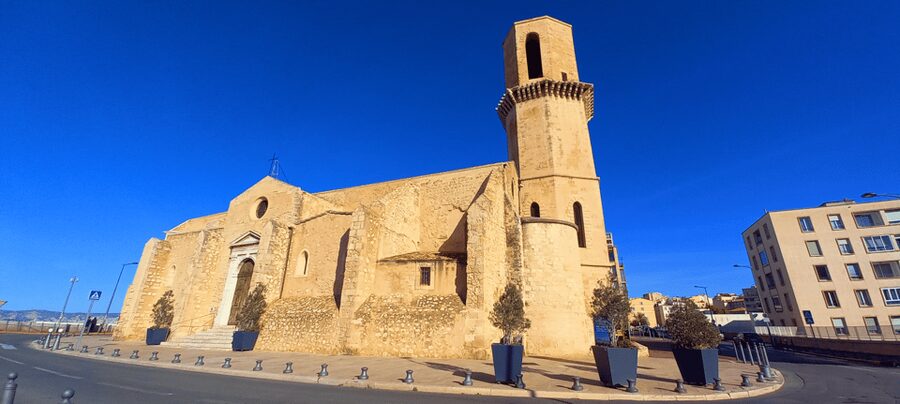
- Saint Victor’s Abbey: Roman architecture meets sea air
- Le Pharo and Palais du Pharo: the Napoleon III view payoff
- Price and what you really get for $41
- Pace, group size, and what to bring so it feels easy
- How this tour helps you enjoy Marseille more after you finish
- Should you book this Marseille guided walking tour?
- FAQ
- Where do I meet the guide?
- How long is the walking tour?
- How far will we walk?
- What languages is the tour offered in?
- Is the tour wheelchair accessible?
- Is food or drinks included?
Key things I’d plan around

- Charles sets the tone with bilingual French and English storytelling, plus humor that keeps the pace light
- Le Panier is your old-maritime-city shortcut, with murals, Vieille Charité, and Windmill Hill viewpoints
- Vieux Port connects eras through the Forts Saint-Jean and Saint-Nicolas and centuries of harbor life
- Saint-Victor Abbey adds “real Rome” vibes with Roman architecture and sea-facing viewpoints
- Palais du Pharo gives you a clean viewpoint payoff, including a look at the Napoleon III era
Start at La Major, then let the city explain itself
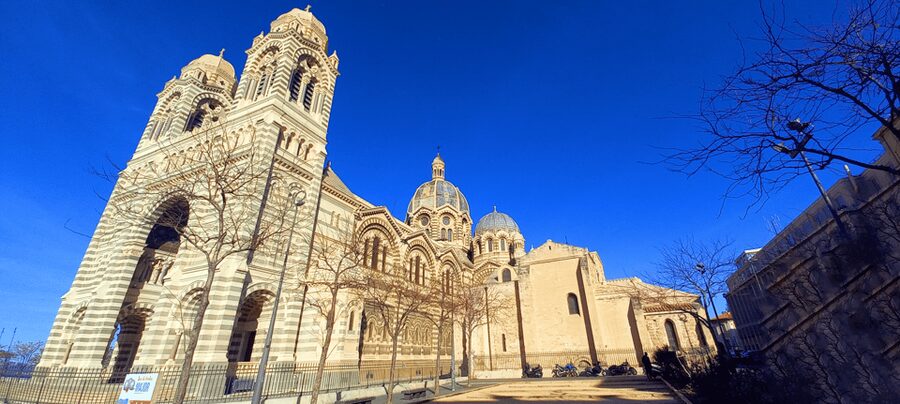
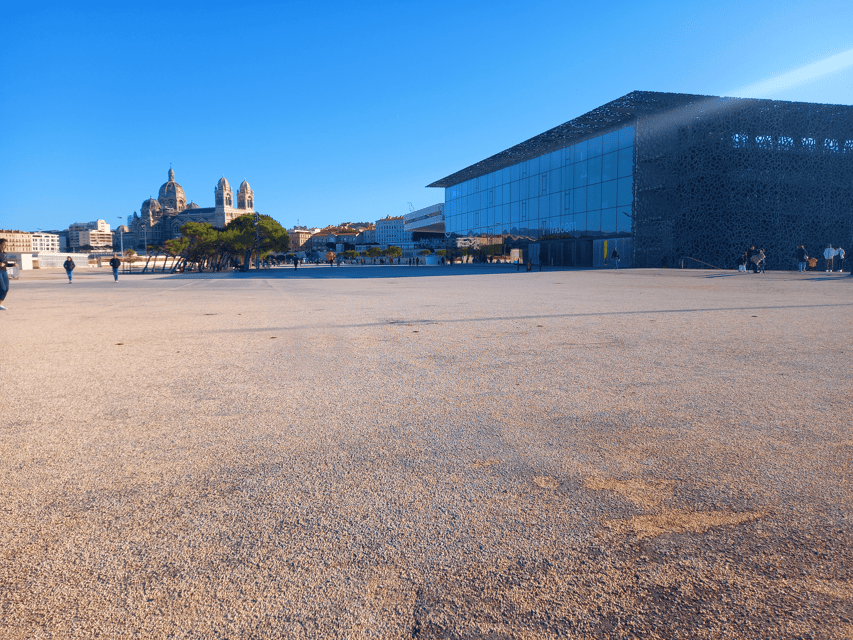
You begin in front of Cathédrale Basilique Sainte-Marie-Majeure, known as La Major, where the Neo-Byzantine and Romanesque look makes a strong first impression. It’s not just a pretty start. It works as a “visual map” for the rest of the walk because Marseille’s identity is always changing, but the city still shows its layers.
From the first minutes, Charles frames what you’re seeing in plain terms: how Marseille grew, what waves of influence shaped it, and why the streets you’ll follow next matter. This is one of the reasons the tour feels worth it, even if you only have a short stay. You’re not wandering—you’re reading the city while you walk.
Practical note: the best way to enjoy this beginning is to arrive ready to look up. Pay attention to façade details and church-style architectural cues as you move, because the guide uses those landmarks like signposts.
The whole city in one go, more ways to see it


Le Panier and Church of Accoules: the hillside side of Marseille
Next you head toward Le Panier, one of the city’s oldest areas. This is the part you’ll remember when you think of Marseille as more than just a port city. You’ll walk streets that feel human-scale, with hillside views over the Mediterranean, and plenty of wall art along the way.
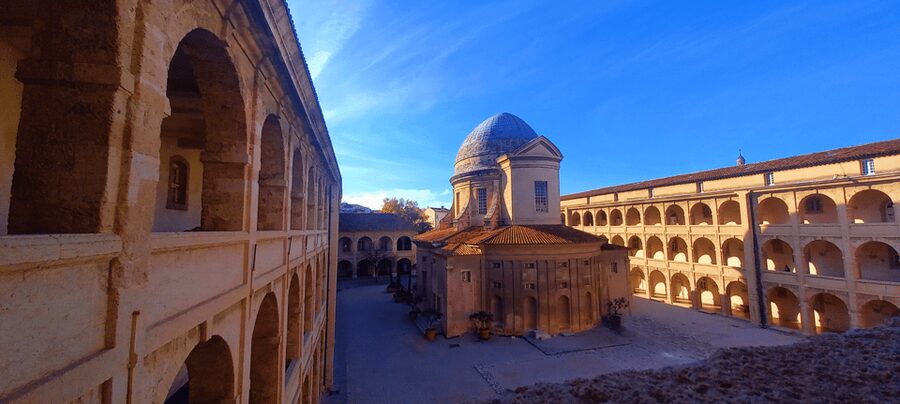
Charles also points out Vieille Charité hospital and Windmill Hill, which helps you connect what might look like “just streets” into something with history and purpose. The charm here isn’t only visual. It’s the way the neighborhood layout shapes your perspective—turn a corner and the view changes, then the stories make sense again.
You also stop at the Church of Accoules, a shorter stop but a good one. Places like this help you understand Marseille’s daily rhythm and local faith traditions, not only the grand monuments. You’ll come away noticing how Marseille’s religious sites and street life blend instead of staying separate.
If you’re the kind of person who likes to see how cities work up close, this section delivers. It’s also a strong “first day” choice because it gives you bearings for later self-guided wandering.
Rue de la République: where everyday Marseille shows up
After the older lanes of Le Panier and Accoules, the tour shifts you to Rue de la République. This is a change of pace, and you’ll feel it. The streets broaden, the energy rises, and you start seeing the city’s everyday shopping and café culture without it turning into a museum loop.
This stretch is about contrast. It helps you understand that Marseille is not frozen in time. Even with all the ancient references Charles brings up, the city is still living now, with people moving through it day to day.
One tip: use this segment to take a breather. If you’ve been walking through steep-feeling streets, Rue de la République can feel like relief. You’ll still be moving, but it’s a good time to refocus and ask questions before you move toward the harbor landmarks.
Vieux Port and the forts: maritime Marseille in one harbor walk
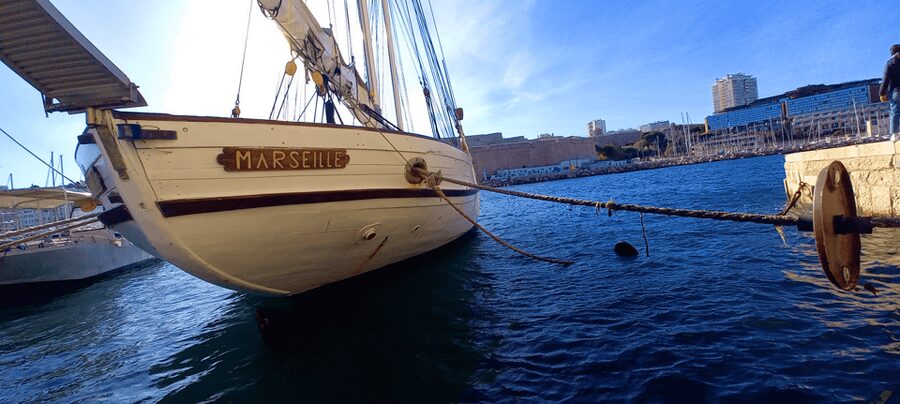
Then you reach Vieux Port, where the harbor becomes the main stage. The port is guarded by Forts Saint-Jean and Saint-Nicolas, and the guide’s job here is to link what you see to what Marseille has depended on for centuries: ships, trade, and the practical geography of being a Mediterranean crossroads.
As you pass picturesque boats and yachts bobbing in bright sea-blue water, it’s easy to focus on the view. Charles steers you toward something more useful: why this port has been a focal point since ancient times, and how that shaped Marseille’s identity.
This is also where the tour turns more serious. You learn about Marseille’s WWII history—its impact on the city and the human side of a tragic chapter. That balance matters. A port view can become only scenery if nobody explains the weight underneath.
If you like history that connects to place, don’t rush this part. Slow down for the harbor edges and the fort perspectives so the stories can land.
Saint Victor’s Abbey: Roman architecture meets sea air
From the port area, you move toward Cours Honoré d’Estienne d’Orves and then to Saint Victor’s Abbey. The abbey stop is where the Roman thread becomes especially tangible. You’ll see and hear about the Roman architecture, and it’s one of those moments where the city’s long timeline doesn’t feel abstract.
This part works well because it’s not just one monument. You’ll walk through the approach, then get the sightseeing viewpoints that come with that climb and shift in perspective. The tour includes a break time (around 20 minutes here) so you can pause, take photos, and let the view catch up with your brain.
That break is also practical. You’ll probably feel the day’s walking weight in your legs by then, especially in warm weather. Use the pause to drink water and reset, because the final stretch to the viewpoints is where you’ll want your energy.
Marseille at walking pace, more routes





Le Pharo and Palais du Pharo: the Napoleon III view payoff
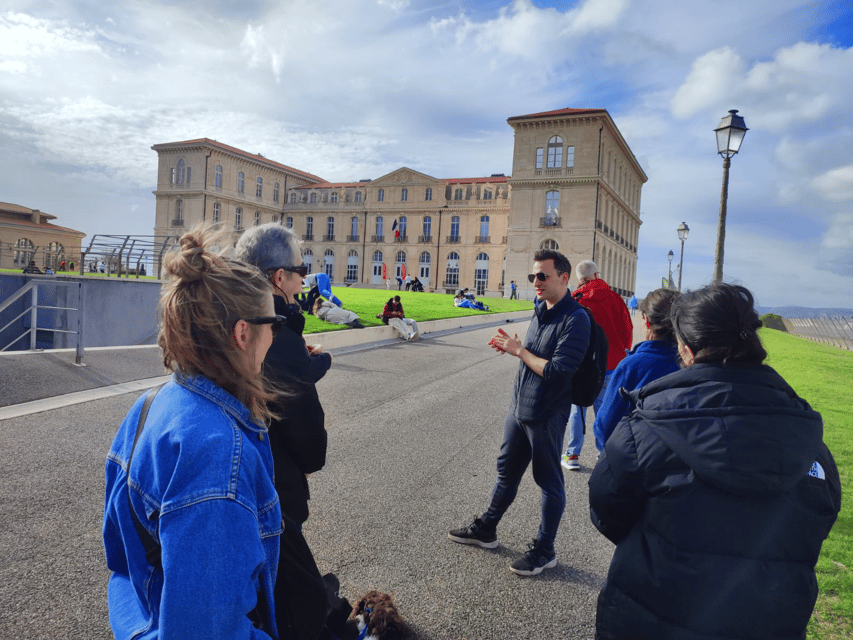
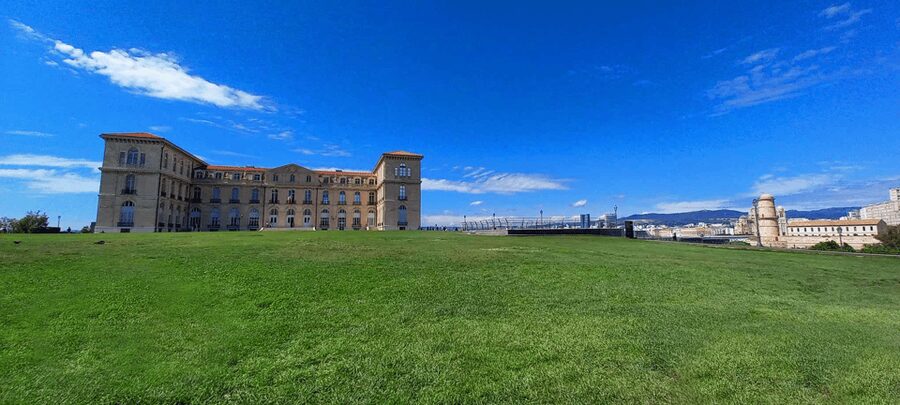
At Palais du Pharo, the mood shifts back to “lookout time.” The palace links Marseille to the Napoleon III era, and you’ll see views of the Palais du Pharo as part of the experience. It’s a great way to end the walking portion because it combines architecture, a sense of grandeur, and wide sightlines over the sea.
Charles also connects this stop to what you saw at Saint Victor’s Abbey, reinforcing the Roman and classical influence that threads through the day. Think of it as your final “theme wrap-up,” but without turning into a lecture.
The tour finishes with return to one of two drop-off areas: Old Port of Marseille or Palais du Pharo. That flexibility is useful. If you want to keep exploring immediately, you can step out closer to where you’re most interested in returning.
Price and what you really get for $41
At $41 per person for a 150-minute guided walking tour with a small group (limited to 8), this is strong value—especially in Marseille, where the best experiences depend on knowing where to look. You’re paying for a guide’s ability to connect street scenes to timelines, plus the time-saving route that keeps you from guessing what matters most.
The “not included” part is also clear: food and drinks are on you. That’s normal for walking tours, but it means you should plan a simple plan—carry water and decide whether you’ll grab something afterward near the Old Port.
This tour is a good fit when:
- you want a fast, organized introduction to Marseille
- you like history explained where it happened
- you’d rather walk with a guide than spend your first day figuring it out solo
It is less ideal if you hate walking or if you need wheelchair access, since the route is about 5 kilometers and it is not suitable for wheelchair users.
Pace, group size, and what to bring so it feels easy
The small group size (up to 8) is a big deal. It makes it easier to ask questions, and Charles can pace the group without losing the flow. Several people noted the pace as a highlight, and that matches what you should expect from a well-managed 2.5-hour city walk.
For your comfort, bring:
- comfortable shoes (do not underestimate this one)
- water and food if you need it
- sunglasses and comfortable clothes
- weather-appropriate layers (you’ll be outside the whole time)
Also, aim to start mentally ready to look up and move steadily. This tour is built around walking between neighborhood “chapters.” If you treat each stop like a quick photo moment and keep your attention on the guide’s storytelling, the experience clicks fast.
How this tour helps you enjoy Marseille more after you finish
The best part of a first-day walking tour isn’t what you see—it’s what you can do afterward. After this route, you’ll understand why Marseille is both ancient and modern at the same time. You’ll have a mental map for where to return for food, views, and additional sightseeing.
Charles also has a habit of sharing recommendations beyond the walk. People highlighted how he offered useful ideas for museums, restaurants, and what to do next. Even if you don’t follow everything, that kind of local guidance helps you spend your limited time better.
If you’re the type who likes to explore independently, this tour sets you up well. You’ll know which streets and viewpoints are worth a second pass—and you’ll be more confident asking people questions in the city because the tour gives you the context first.
Should you book this Marseille guided walking tour?
Book it if you want a well-paced first introduction to Marseille with a local guide who connects architecture, neighborhoods, the harbor, and WWII history into one walk. The small group size and bilingual French-English format make it feel personal, not rushed.
Skip it (or plan differently) if you need wheelchair accessibility or if 5 kilometers of walking feels like too much for your comfort level. And if you’re only looking for food-focused stops, you’ll need to add your own meals since food and drinks aren’t included.
If you’re flexible, you can also book with the option to reserve now and pay later, which makes it easier to match the tour to your Marseille weather and sightseeing schedule.
FAQ
Where do I meet the guide?
Meet your guide in front of Cathédrale Basilique Sainte-Marie-Majeure (La Major) in Marseille. The guide will be wearing a white cap.
How long is the walking tour?
The tour lasts 150 minutes.
How far will we walk?
This tour covers a 5 kilometer route.
What languages is the tour offered in?
The live tour guide speaks French and English.
Is the tour wheelchair accessible?
No. The tour is not suitable for wheelchair users.
Is food or drinks included?
No. Food and drinks are not included. The tour includes the guide and the walking tour only.
More Tour Reviews in Marseille



Marseille at Walking Pace
Marseille, End to End

Just Added: Fresh Marseille Reviews








Marseille City Sightseeing, compared.
 ★ 3.8City Sightseeing Hop-On Hop-Off Bus TourFrom $272,820 reviews
 ★ 4.8City Highlights Guided Half-Day E-Bike TourFrom $67325 reviews
 ★ 4.0Marseille Shore Excursion: City Sightseeing Tour of MarseilleFrom $96321 reviews
 ★ 4.8Iconic Calanques Boat Tour with SwimmingFrom $90281 reviews
 ★ 5.0Half-Day City Highlights Guided Walking TourFrom $58273 reviews
 ★ 4.7Provence Sightseeing Tour and Wine TastingFrom $199195 reviews
 ★ 4.9Sightseeing E-Bike TourFrom $58161 reviews
 ★ 4.5Cassis and Aix en Provence Sightseeing Tour from MarseilleFrom $162132 reviews
Browse the lists this tour appears in