

Reviewed · MARSEILLE CITY SIGHTSEEING
Marseille Walking Tour: Explore Top Sights & Hidden Gems
Marseille’s best stories are on foot. This Marseille walking tour threads together big-name sights and off-the-radar stops around the Vieux-Port area, with a guide who ties it all into one smooth walk. You’ll get a fast feel for how the city thinks: faith, sea, markets, and old stones sharing the same sidewalk.
What I like most is the mix of free, meaningful stops and the way the guide makes each one connect to the next. I also love the small-group feel (max 20) because you’re not just passing by—you’re actually hearing what you’re looking at, even when you’re standing in a very ordinary-looking street corner.
One thing to plan for: there are steps and uneven pavement. If walking is tough for you, this may feel like more of a workout than a leisurely stroll.
In This Review
- Key Highlights You’ll Care About
- How This Marseille Walking Tour Really Feels
- Starting at Métro Vieux Port: Where the Route Makes Sense
- Stop 1: Jardin des Vestiges for the Calm-Then-Creepy Contrast
- Stop 2: Hôtel Dieu Intercontinental Marseille and the Hospital-to-Hotel Story
- Stop 3: Le Panier’s Narrow Lanes and Real Neighborhood Energy
- Stop 4: Cathédrale de la Major and the Light-Through-Stained-Glass Moment
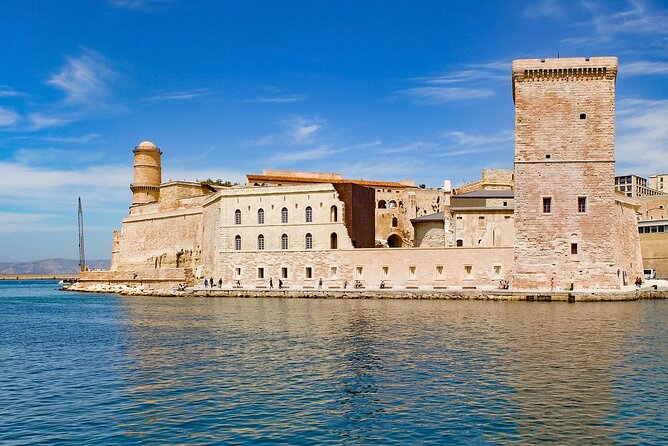
- Stop 5: Fort Saint-Jean at the Old Port Entrance
- Stop 6: La Canebière and the Quick Surprise Stops
- Who This Tour Fits Best
- Value Check: Is $36 Worth It?
- Smart Practical Tips Before You Go
- Should You Book This Marseille Walking Tour?
Key Highlights You’ll Care About
- Jardin des Vestiges: quiet ruins tucked in the middle of everyday Marseille life
- Le Panier: Marseille’s oldest district, with narrow lanes and local rhythms
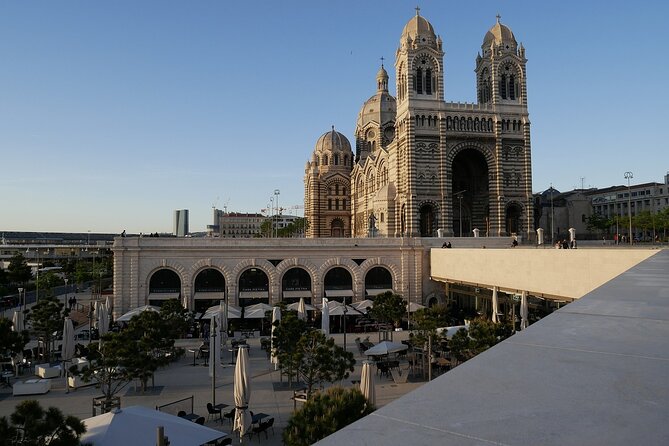
- Cathédrale de la Major: big architectural drama with light that changes the interior
- Fort Saint-Jean: classic maritime views from the edge of the old port
- A pro guide who keeps it moving: practical pacing and helpful context throughout
How This Marseille Walking Tour Really Feels
This is a tightly packed walk built for orientation. Even if you’ve only got a day (or a half-day) in Marseille, you come away understanding where the “real” energy sits: the old port zone, the hillier old neighborhoods, and the monumental landmarks that shape the skyline.
The tour runs about 1 hour 30 minutes on paper, and the route is paced in chunks around 15 minutes per stop. One practical note: it can run a bit longer in the real world, depending on the group and how many questions pop up, so I’d give yourself some breathing room after.
The price—$36 per person—works out well because the experience includes a professional guide and the stop admissions are free. You’re paying mostly for guide time and local expertise, not for a stack of ticketed entries.
The whole city in one go, more ways to see it


Starting at Métro Vieux Port: Where the Route Makes Sense
You’ll meet at Métro Vieux Port Marseille, and the walk loops back there at the end. That matters more than it sounds, because it keeps you close to transit, food, and the main port area, so you can keep your day flexible.
Also, being near public transportation helps if your timing is imperfect. Marseille traffic can be unpredictable, but getting to Vieux-Port is usually straightforward, and you’re not stuck far from your next plan once the tour ends.
Stop 1: Jardin des Vestiges for the Calm-Then-Creepy Contrast
Jardin des Vestiges is the kind of place you want when the city feels too loud. You step into a quieter pocket where time feels slower, surrounded by remnants that look mossy and weather-worn—human leftovers mixed with plant life.
This stop works as a reset. After the built-up streets of Marseille, you get a chance to slow down and notice details: old stone textures, the way the ruins sit within nature, and the feeling of history that isn’t displayed like a museum. It’s also a free admission stop, so you’re not losing budget time before the tour really gets going.
If you’re a photo person, this is one of the better breaks for shots that don’t look like the usual “big monument” angle.
Stop 2: Hôtel Dieu Intercontinental Marseille and the Hospital-to-Hotel Story
Right near the center, you’ll get a look at Hôtel Dieu Intercontinental Marseille—a building with a long past that now operates as a luxury hotel. The architecture is imposing, and the guide typically frames it so you see the transformation: a place built for care, later repurposed for travelers.
Even if you’re not staying at the hotel, you’ll still appreciate it because it shows how Marseille reuses what it already has. You’re looking at a building that carries identity, not a brand-new facade dropped into place.
One practical point: if you’re hoping for lots of interior time, this part is mainly about exterior presence and short, focused viewing. That said, it’s still a good “anchor stop” because it visually sets the tone for the walking route.
Stop 3: Le Panier’s Narrow Lanes and Real Neighborhood Energy
Then comes Le Panier, Marseille’s oldest district. This is where you trade monuments for lived-in streets: narrow lanes, small squares, and the everyday rhythm of locals popping into shops and cafés.
I like this stop because it teaches you how to read Marseille. Instead of memorizing landmarks only, you learn the shape of the neighborhoods—how streets bend, how you find little open spaces, and how old and new share the same blocks. It’s a good counterbalance to the more formal architecture elsewhere on the route.
One small drawback: the lanes can be uneven and the walking is close-footwork. If you’re wearing slick soles or you’re dragging luggage, you’ll feel it here.
Marseille at walking pace, more routes





Stop 4: Cathédrale de la Major and the Light-Through-Stained-Glass Moment
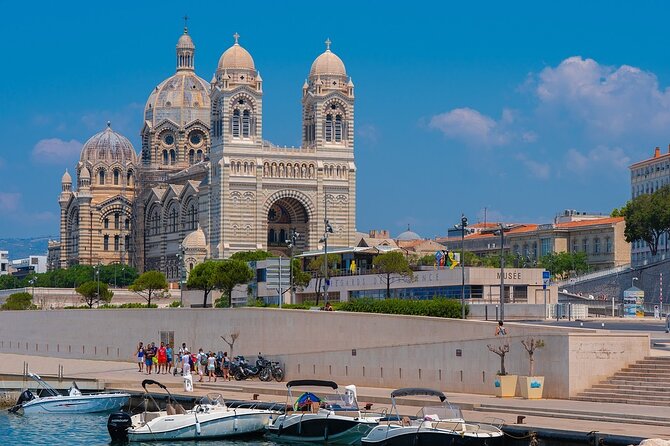
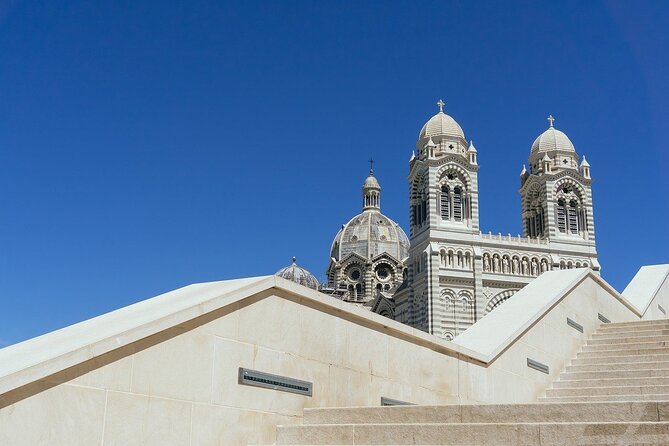
Cathédrale de la Major is the skyline payoff. From outside, it commands attention with its dramatic forms, and inside, the light can feel like the building is doing the storytelling for you.
This stop is valuable because it’s not just a photo stop. The guide tends to connect what you see to Marseille’s spiritual and cultural identity—why this kind of cathedral fits the city’s story. You don’t need to be a church-history expert to appreciate the scale, the craftsmanship, and how the interior shifts once daylight hits the glass.
A tip: if you’re sensitive to crowds or noise, arrive in a calmer moment within the stop time. The tour pacing usually helps, but Marseille is still Marseille—there’s always some movement around a major church.
Stop 5: Fort Saint-Jean at the Old Port Entrance
At the entrance of the old port, you’ll reach Fort Saint-Jean, built in the 17th century. It’s one of those “quietly commanding” structures where the walls make sense even if you’ve never studied military architecture.
The real reason to include it, though, is the viewpoint. From the fort area, you can take in the Mediterranean angles and understand the port as something bigger than a place to eat and stroll. It’s Marseille’s maritime roots in physical form—strategic, practical, and built to last.
Also, the fort has become a cultural stop in its modern use, so you’ll be looking at a living site rather than a frozen ruin. Admission is free for this portion as well, which is a smart value perk.
Stop 6: La Canebière and the Quick Surprise Stops
After the big anchors (Le Panier, the cathedral, the fort), the walk keeps going along La Canebière, one of Marseille’s best-known avenues. You get the sense of momentum—how the city connects its layers, from old quarter streets to wider thoroughfares.
The tour description keeps a few additional parts as a surprise. That’s not just marketing fluff. Surprise stops often mean you catch small angles you’d never think to look for on your own, especially if you’re new to Marseille.
Who This Tour Fits Best
This Marseille walking tour is a strong choice if you want:
- a tight orientation to major sights plus local-feeling streets
- a guide-led “what you’re seeing and why it matters” experience
- a small group walk (max 20) that won’t feel chaotic
It’s also a great fit for cruise-day visitors and first-timers because the route starts/ends at Vieux-Port and stays centered on the city’s core.
The main “nope” category is anyone who struggles with stairs or uneven walking surfaces. Even when the tour is short, the route can include stepped areas and cobbled or uneven pavement, and you’ll feel it.
Value Check: Is $36 Worth It?
For $36, you’re getting:
- a professional guide
- about 1.5 hours of structured walking
- free admission to the featured stops (so you’re not paying extra per stop)
That makes the pricing feel fair for a city like Marseille, where self-guided sightseeing is easy but interpretation is harder. If you enjoy history and want context beyond what you read on a sign, the guide component is where the value lands.
If you’re the type who hates group pacing, then it may feel “scheduled.” But for most people, the structure is what keeps the tour efficient.
Smart Practical Tips Before You Go
- Wear comfortable walking shoes. This is the biggest make-or-break detail on any Marseille walking route.
- Bring water, especially if you’re walking in warm weather.
- If you have questions, ask early. The guide’s job is to explain, and the best info tends to come out when you show interest.
- Plan lunch nearby after the tour. The route finishes by Vieux-Port, where you’ve got lots of easy choices.
Should You Book This Marseille Walking Tour?
I’d book it if you want a first-pass Marseille experience that connects the dots: old stones at Jardin des Vestiges, the city’s layered identity in Le Panier, and the major landmarks that give Marseille its skyline and sea-facing personality.
I would skip or think twice if stairs and uneven pavement are a problem for you. The route is short, but it’s not a flat promenade.
If you’re aiming to see the highlights without turning it into a scavenger hunt, this one is a solid bet—good pacing, free entries, and a guide who clearly enjoys bringing Marseille to life.
More Tour Reviews in Marseille




Marseille at Walking Pace
Marseille, End to End


Just Added: Fresh Marseille Reviews












Marseille City Sightseeing, compared.
 ★ 3.8City Sightseeing Hop-On Hop-Off Bus TourFrom $272,820 reviews
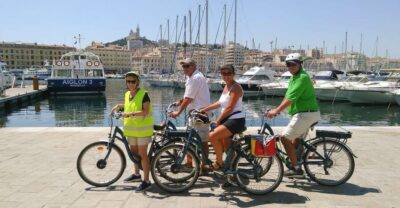 ★ 4.8City Highlights Guided Half-Day E-Bike TourFrom $67325 reviews
 ★ 4.0Marseille Shore Excursion: City Sightseeing Tour of MarseilleFrom $96321 reviews
 ★ 4.8Iconic Calanques Boat Tour with SwimmingFrom $90281 reviews
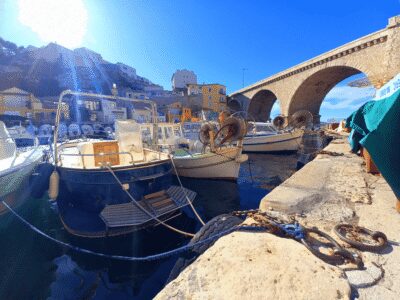 ★ 5.0Half-Day City Highlights Guided Walking TourFrom $58273 reviews
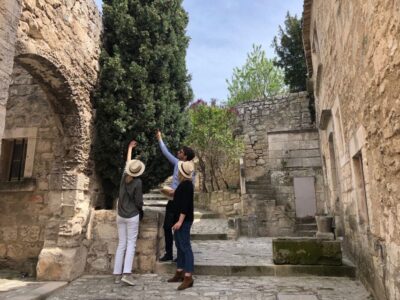 ★ 4.7Provence Sightseeing Tour and Wine TastingFrom $199195 reviews
 ★ 4.9Essential Guided Walking Tour of the CityFrom $41161 reviews
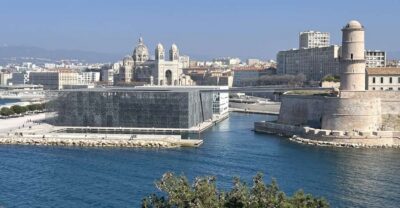 ★ 4.9Sightseeing E-Bike TourFrom $58161 reviews
Browse the lists this tour appears in