

Reviewed · MARSEILLE CITY SIGHTSEEING
Explore Marseille in 90 minutes with a Local
Marseille can feel like it has layers, and this quick walk is a smart way in. You’ll cover Palais Longchamp and the striking MuCEM while learning how locals move through the city day to day, not just what postcards show.
You’ll also get a guided route along the big landmarks on and near the waterfront, plus personalized recommendations that help you plan the rest of your time in Marseille. One thing to consider: this is an introduction-style outing, and while the guides are local, the depth of history and the English level can vary.
In This Review
- Key things you’ll notice (in a good way)
- A tight 90 minutes that gives you the lay of the land
- Starting on La Canebière and the story behind Palais de la Bourse
- Palais Longchamp: monuments, water, and why it matters
- The Cathedral of Marseille near the Old Port
- MuCEM: modern architecture meets Mediterranean culture
- CCIAMP and local commerce: Marseille isn’t just scenery
- Small group pacing and what you should watch for
- Is it worth $119.21? My honest take on the value
- Who this walking tour suits best
- Quick tips to get more out of the walk
- Should you book this Marseille 90-minute walk?
- FAQ
- How long is the Marseille walking tour?
- How much does it cost?
- What language is the tour offered in?
- How big is the group?
- What’s included in the price?
- What is not included?
- Where does the tour start and end?
- Is it suitable for people with mobility issues?
Key things you’ll notice (in a good way)
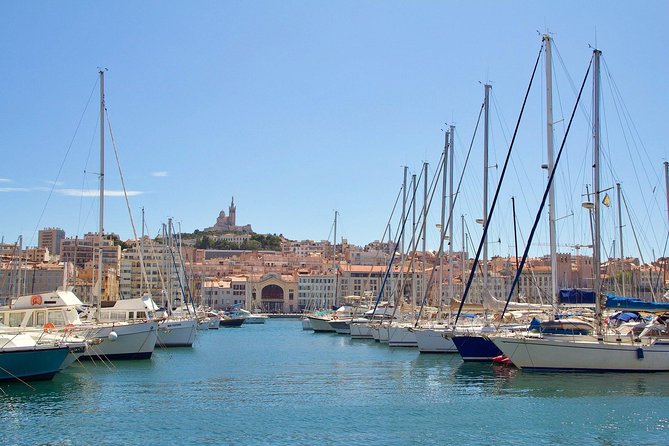
- La Canebière and Palais de la Bourse: see where Marseille’s trade story ties into daily life
- Palais Longchamp: a monumental stop with gardens, fountains, and cultural spaces
- Cathedral of Marseille (near the Old Port): a Byzantine-Roman look that feels unlike many French churches
- MuCEM: modern architecture paired with Mediterranean identity
- CCIAMP: a practical look at how commerce and business fit the city
A tight 90 minutes that gives you the lay of the land
If you’ve only got a short window in Marseille, you need two things: orientation and good “where next?” advice. This tour delivers both in about 1 hour 30 minutes with a small group capped at up to 8 travelers. That group size matters. In a place like Marseille, streets, neighborhoods, and sightlines can change fast, and having fewer people makes it easier for your guide to pace the walk and point out what you’d miss on your own.
The structure is simple: walk a loop of major highlights, then get local context and recommendations as you go. You won’t feel stuck in a museum line for this one, because the tour is built around getting you outside and moving. And since the route can adapt to your interests and walking pace, the guide isn’t locked into a rigid checklist.
Price-wise, $119.21 per person is on the higher side for a short walking tour. But the value is in the combination: the local guide time, the small-group format, and the personalized suggestions for the rest of your day. If you’re traveling solo or as a couple and you don’t want to spend time figuring out logistics, this can actually be a money-saver compared to adding separate transport and multiple guide-style experiences.
The whole city in one go, more ways to see it



Starting on La Canebière and the story behind Palais de la Bourse
Your meeting point is 9 La Canebière, 13001 Marseille. La Canebière is one of the city’s main arteries, and it’s a useful place to begin because it quickly frames how Marseille works: wide streets, heavy pedestrian flow, and historic buildings that still feel connected to modern city life.
The first major stop is Palais de la Bourse, described as a historic trade hub. This is where you start understanding Marseille as a port city first, not just a scenic one. The key idea here is that Marseille’s identity isn’t only art and architecture. It’s commerce, shipping, and the constant movement of goods and people. Palais de la Bourse gives you that economic backbone—so later, when you look at museums and monuments, you can see how they grew out of the city’s maritime importance.
What I like about starting with this kind of stop is that it sets your expectations. You stop treating Marseille like a set of standalone sights. You start noticing connections.
If there’s a drawback for some people, it’s this: an intro walk can only cover so much. If you want a deep, heavily detailed history lesson for every building, you may feel the pace is lighter than a specialized historical tour. The good news is that the guide can steer attention toward what you care about, as long as you speak up.
Palais Longchamp: monuments, water, and why it matters
Next you move to Palais Longchamp, a grand monument known for lush gardens, fountains, and museums. This stop is memorable because it’s not a quick “look and go.” It has presence. Even if you only spend a short time here, you’ll feel the scale and the planning behind it.
The big theme is the arrival of canal water to Marseille. That might sound like a technical detail, but it’s actually one of those foundational stories that explain why cities like Marseille expand and function. Water infrastructure shapes neighborhoods, daily routines, and the ability to support growth. When you learn that context, fountains and gardens stop being just pretty features. They become evidence of how the city solved real-life problems.
Practical tip: this is a great place to slow down for a moment and actually look at the surroundings. Gardens and fountains can change the whole mood of an area. If you’re planning the rest of your afternoon, this stop often helps you decide whether you want more museum time or more waterfront wandering.
The Cathedral of Marseille near the Old Port

From there, you head toward the Cathedral of Marseille, located near the Old Port area. This cathedral is known for its intricate Byzantine-Roman style. That description is accurate to how it reads visually: the architecture doesn’t feel like the most familiar version of French cathedral design. It stands out in form, detail, and character.
Why it’s worth including on a short walk: the Old Port area is where tourists naturally gravitate first, but cathedrals near ports usually tie into older layers of a city’s identity. Even on an intro walk, the guide’s job is to help you connect the religious art you’re seeing to the broader cultural map around it.
Here’s the consideration: cathedral exteriors and areas nearby can mean you’re walking in tighter city spaces and around crowds. The upside is you get the “real Marseille” feel; the tradeoff is that your walking pace and route can be affected by pedestrian flow and weather. The tour notes that stops may vary depending on conditions, which is exactly what you’d want in a coastal city.
MuCEM: modern architecture meets Mediterranean culture
Then comes MuCEM, the modern museum dedicated to the cultural heritage of Europe and the Mediterranean. If you’re wondering why Marseille keeps showing up as a crossroads—this is a big reason. The museum’s mission matches the city’s position geographically and culturally.
What makes this stop especially useful on a 90-minute walk is timing. By the time you reach MuCEM, you’ve already gotten context from the economic and infrastructural stories (trade hub, canal water). So when you see a modern institution focused on Mediterranean identity, the whole narrative clicks together.
Tickets for museums and monuments are not included, so you’ll have to decide on the spot whether you want to go in. Even if you skip the interior, the area around MuCEM is worth seeing. For many people, this is where Marseille stops feeling like a list of landmarks and starts feeling like a city with an actual point of view.
Your walk ends at MuCEM at 1 Esp. J4, 13002 Marseille (the Museum of European and Mediterranean Civilisations). That finish location is convenient. You’re not sent off into an unfamiliar maze; you’re dropped at a major hub.
Your own guide, more private Marseille days






CCIAMP and local commerce: Marseille isn’t just scenery
Between the bigger headline sights, you also stop at CCIAMP, an iconic building tied to local commerce. This is one of those inclusions that makes the tour feel practical. It’s easy to spend a day in Marseille only looking at art, churches, and ocean views. But commerce is what keeps a port city alive.
Seeing the CCIAMP building during your walk gives you a different lens: Marseille isn’t just heritage. It’s working life. Even if you don’t go inside, the presence of a commerce-focused institution in the route tells you that the city organizes itself around trade and business, just like it always has.
And because this tour is designed as an intro with local stories and recommendations, your guide can help you translate what you see into where to go next for food, shopping, or a calmer stroll.
Small group pacing and what you should watch for
This experience is offered by an independent local and capped at 8 travelers, with English as the offered language. Confirmation is sent at booking time. Service animals are allowed. It’s also near public transportation, so it’s not hard to slot into a day even if you’re juggling museum visits.
The itinerary adapts to your interests and walking pace. That’s a big deal for comfort. Marseille can include stretches where the ground, turns, or crowding slow you down. On a short tour, you don’t want to feel rushed, and a flexible guide makes the experience more about you rather than the clock.
One more practical note: this isn’t recommended for guests with impaired mobility. The tour is a walking experience with multiple stops, and the city streets around the Old Port and waterfront areas aren’t set up for every mobility need. If that’s your situation, you’ll probably do better with a less step-heavy plan.
Is it worth $119.21? My honest take on the value

For $119.21 per person for about 90 minutes, you’re paying for a few things that add up quickly:
- A live guide time slot
- A small group (not a big bus-style pack)
- Personalised recommendations (the part that saves you guesswork)
- A route that strings together major sights into one coherent walk
If you’re the type of traveler who likes to arrive, take a breath, and then instantly know what to do next, the recommendation piece can easily be worth the extra cost. The tour is also timed well for a first visit. By the time you finish at MuCEM, you typically have enough context to choose between a museum deep dive, a waterfront walk, or an easy meal plan.
If you want very detailed history for every building, you might find the pace light. That doesn’t mean it’s bad—it just means you should match expectations. This is an orientation walk with local context, not a specialized lecture.
Who this walking tour suits best
You’ll likely love this if:
- You have limited time in Marseille and want the highlights without juggling transit
- You prefer a guided route that helps you choose what to do next
- You like learning the city through everyday culture and real-life local context
- You’re comfortable walking for about 90 minutes
You might want to think twice if:
- You need step-free access or mobility support (it’s not recommended for impaired mobility)
- You’re expecting a deep historical presentation at every stop
- You’re very sensitive to language clarity and guide communication
Quick tips to get more out of the walk
- Wear shoes that handle urban walking. Marseille streets and sidewalks vary.
- Bring a light layer if the weather turns, especially near the waterfront.
- When your guide pauses, ask one question about what to do later that day. That’s where personalized recommendations can pay off fast.
- If you’re interested in museum interiors, plan your budget for entry tickets since they’re not included.
And if you’re booking last minute, note there is free cancellation up to 24 hours before the start time, which makes it easier to adjust if your schedule shifts.
Should you book this Marseille 90-minute walk?
If it’s your first time in Marseille and you want a straightforward way to connect key landmarks to the city’s working life, I’d book it. This is one of those short experiences that helps you stop wandering randomly and start exploring with a plan. The MuCEM finish is also a smart choice because it leaves you in a major area where it’s easy to continue.
Just go in with the right expectation: it’s an intro-style walking tour with local stories and recommendations, not a full-blown historical course. If you want that, you’ll likely be happier adding a separate museum-focused day. If you want bearings, context, and a good route, this is a solid pick—especially with the small group size and the quick pace that fits real travel schedules.
FAQ
How long is the Marseille walking tour?
The tour lasts about 1 hour 30 minutes.
How much does it cost?
It costs $119.21 per person.
What language is the tour offered in?
The tour is offered in English.
How big is the group?
The group is capped at up to 8 travelers.
What’s included in the price?
You get a knowledgeable local guide, a small group experience, and personalised recommendations.
What is not included?
Personal expenses are not included, and entry tickets for transportation, museums, and monuments are excluded.
Where does the tour start and end?
It starts at 9 La Canebière, 13001 Marseille, France and ends at Museum of European and Mediterranean Civilisations, 1 Esp. J4, 13002 Marseille.
Is it suitable for people with mobility issues?
It is not recommended for guests with impaired mobility. The tour involves walking.
More Tour Reviews in Marseille





Your Own Marseille, Just Your Group
Marseille, End to End


Just Added: Fresh Marseille Reviews












Marseille City Sightseeing, compared.
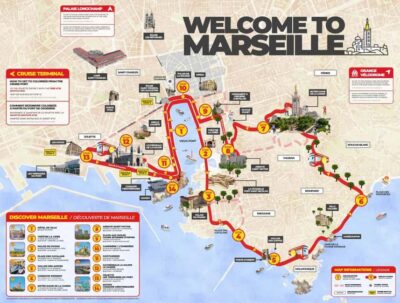 ★ 3.8City Sightseeing Hop-On Hop-Off Bus TourFrom $272,820 reviews
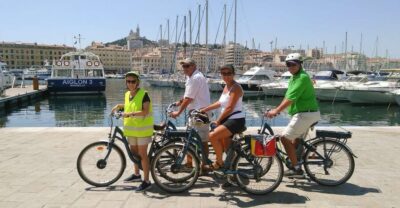 ★ 4.8City Highlights Guided Half-Day E-Bike TourFrom $67325 reviews
 ★ 4.0Marseille Shore Excursion: City Sightseeing Tour of MarseilleFrom $96321 reviews
 ★ 4.8Iconic Calanques Boat Tour with SwimmingFrom $90281 reviews
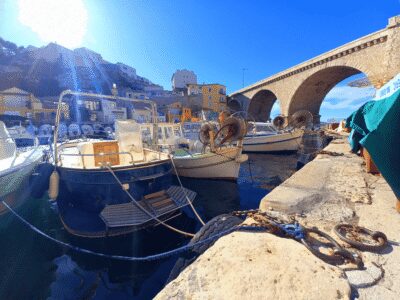 ★ 5.0Half-Day City Highlights Guided Walking TourFrom $58273 reviews
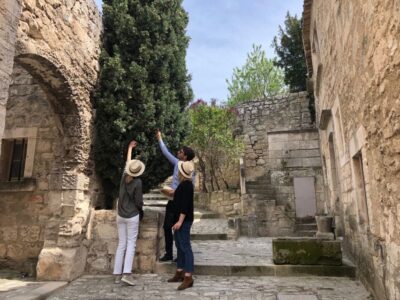 ★ 4.7Provence Sightseeing Tour and Wine TastingFrom $199195 reviews
 ★ 4.9Essential Guided Walking Tour of the CityFrom $41161 reviews
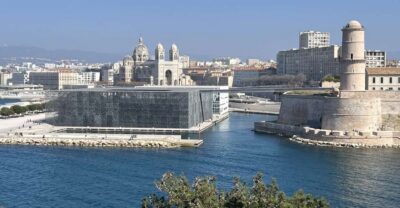 ★ 4.9Sightseeing E-Bike TourFrom $58161 reviews
Browse the lists this tour appears in